







Archives
Feature, Freight News, Logistics, Road
Tight Truck Capacity Causes Intermodal Shift
[ October 9, 2026 // Gary Burrows ]Tightening U.S. truckload capacity is pushing more freight into intermodal and LTL networks as shippers seek alternatives to rising trucking costs, according to C.H. Robinson’s October market outlook.
The logistics provider said route-guide failures remain elevated in truckload, while carriers are becoming increasingly selective about the freight they accept. Carrier feedback collected by C.H. Robinson shows steady demand and elevated tender rejections, with carriers obtaining contract rate increases to offset higher operating costs. Dedicated, repeatable freight is being favored while inefficient freight is increasingly avoided.
Driver availability remains a major constraint. Carriers cited recruiting and retention difficulties, a shrinking candidate pool and greater competition for experienced drivers. Federal enforcement involving commercial driver licenses, visas and English-language proficiency could further reduce the available driver pool, C.H. Robinson said. Fleet expansion also remains limited amid higher equipment, financing, maintenance and insurance costs.
C.H. Robinson forecasts the pressure will continue into 2027. Its spot-market forecast calls for dry van cost per mile to rise 10 percent year over year in 2027 after a projected 30 percent increase in 2026. Refrigerated costs are forecast to rise another 11 percent next year following a 31 percent increase this year, while flatbed is projected to increase 10 percent after a 28 percent gain in 2026.
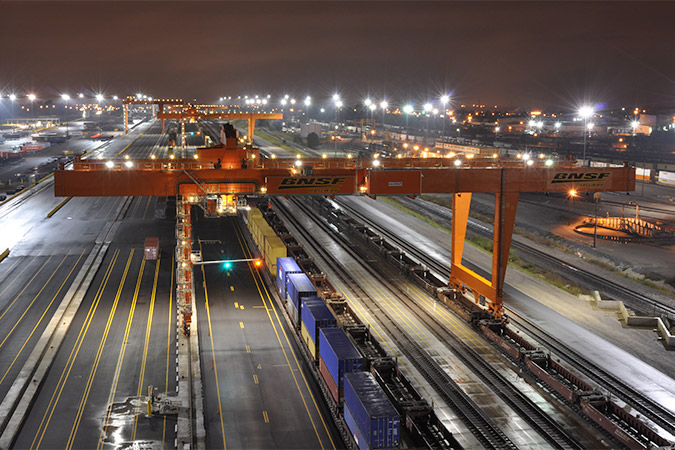
Those conditions are increasingly pushing freight toward intermodal.
C.H. Robinson said intermodal demand strengthened through September, with domestic volumes well above historical averages. While earlier gains were driven primarily by shippers looking for savings as diesel prices increased, more recent growth reflects tightening truck capacity and demand for dependable long-haul capacity.
The company characterized intermodal as increasingly a strategic capacity solution rather than simply a lower-cost alternative to trucking. Rising trucking costs for insurance, labor, equipment and maintenance are widening the range of lanes where intermodal can provide both capacity and cost advantages.
The shift is producing its own capacity pressures. Truckload carriers became more selective during September, moving more freight into intermodal networks, particularly on lanes between 550 and 1,500 miles. C.H. Robinson reported chassis shortages and longer transit times in several East Coast markets, including New York/New Jersey and Baltimore, with equipment pressure also evident in Chicago, Atlanta, Memphis and Charlotte.
The growing disparity between truckload and intermodal pricing has become one of the more significant transportation trends of 2026, according to C.H. Robinson. Truckload rates have risen sharply while intermodal prices have moved more gradually, strengthening rail’s value proposition. Higher intermodal utilization, however, is beginning to generate upward pricing pressure in some markets.
For 2027, C.H. Robinson expects intermodal contract pricing to be steady to higher as demand growth outpaces available capacity in portions of the network. West Coast capacity remains particularly constrained, while moderate price increases are more likely in central and eastern markets.
LTL is also absorbing freight from the tightening truckload market. C.H. Robinson said LTL carriers reported stable operating conditions through September while industry data showed improving shipment tonnage, with some of that growth linked to tightening truckload capacity.
Fuel remains another variable. Higher diesel costs affect all modes but have an especially large impact on truckload, while different fuel-surcharge structures can preserve some of intermodal’s cost advantage. C.H. Robinson recommends shippers consider blended truckload and intermodal strategies where freight characteristics and transit requirements permit.
Tags: C.H. Robinson