







Archives
Feature, Freight News, Logistics, Sea
Fuel-flexible Bulkers Enter Orderbook
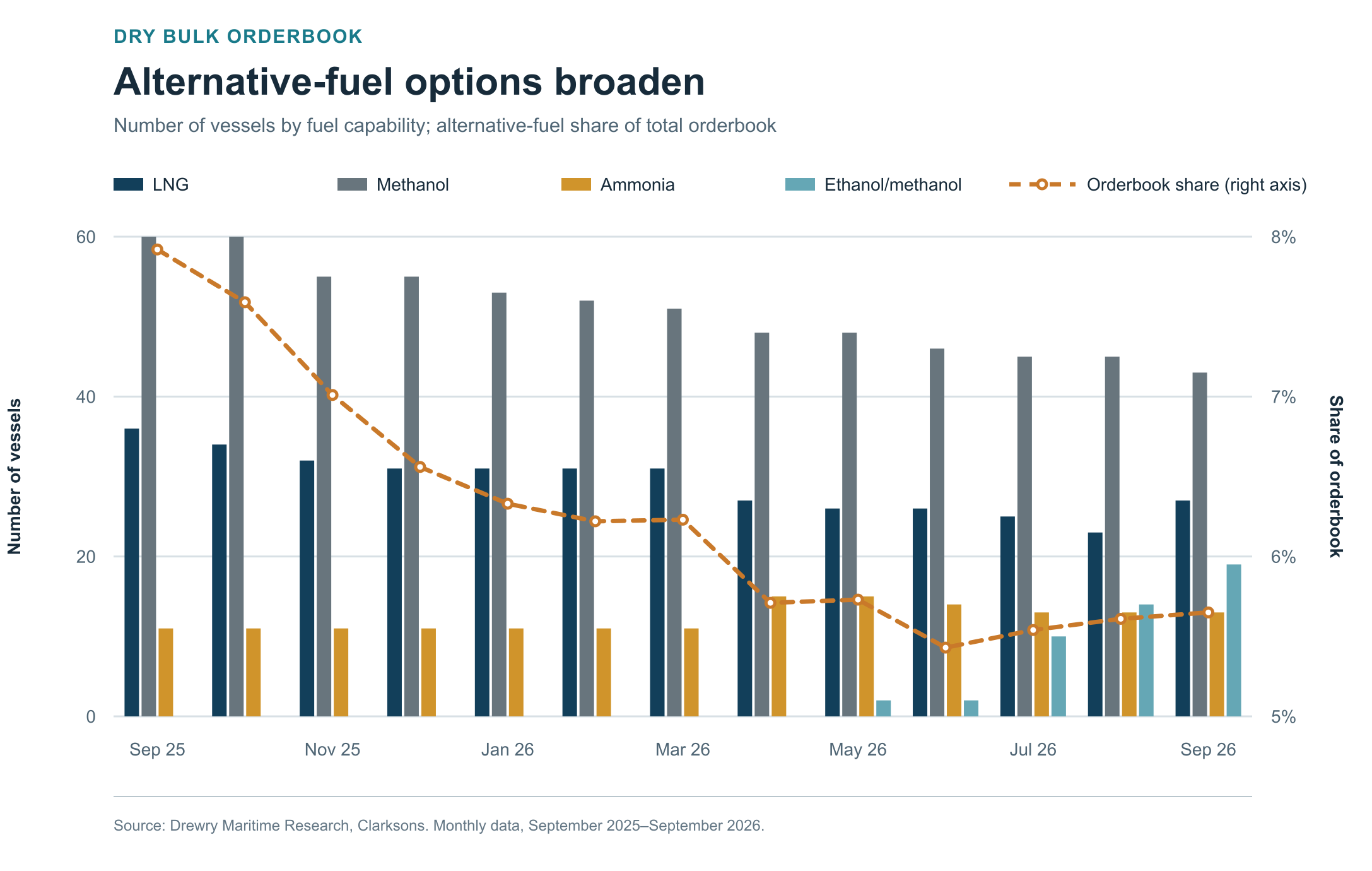
[ November 5, 2026 // Gary Burrows ]Ethanol-capable vessels have entered the dry bulk orderbook for the first time, with 19 methanol- and ethanol-capable ships now on order, according to Drewry.
The orders are connected to Vale’s program for fuel-flexible ore carriers and involve several owners securing vessels against long-term employment with the Brazilian miner. Vale’s broader program could encompass as many as 30 large ore carriers.
The development reflects efforts to preserve fuel options while the future cost, availability and regulatory treatment of alternative fuels remain uncertain. It does not yet indicate widespread ethanol adoption. Methanol represented only 0.3 percent of alternative-fuel consumption in 2025 on an energy basis.
Dry bulk vessels operate across changing trade routes, making widespread bunker availability especially important. A ship’s ability to use an alternative fuel offers limited value if that fuel is unavailable along its trading pattern.
Other owners are taking a more cautious approach. Pacific Basin replaced four planned methanol dual-fuel Ultramax newbuilds with conventionally fueled vessels, reducing the reported program cost from $186 million to $156.8 million. The company retained options for two dual-fuel ships and cited uncertainty surrounding the IMO Net-Zero Framework as one factor.
The decision illustrates the choice facing owners: pay more for future fuel flexibility or invest in efficient conventional tonnage while fuel prices, bunkering networks and emissions regulation remain unsettled.
Drewry said fuel capability could eventually affect which vessels compete most effectively for cargo. If carbon costs rise and charterers increasingly consider Scope 3 emissions, fuel-flexible ships could gain access to a broader range of employment.
The 19-vessel orderbook therefore represents an investment in optionality rather than evidence that ethanol is about to become a major dry bulk fuel. Whether that capability becomes a commercial advantage will depend on fuel supply, price, regulation and charterer demand.
Tags: Drewry