








Archives
Freight News, Logistics
BAR Makes Case for VLCC Wind Retrofits
[ November 13, 2026 // Gary Burrows ]High secondhand tanker values and a limited newbuilding supply could strengthen the economic case for adding wind-assisted propulsion to older vessels, according to BAR Technologies.
The Portsmouth, UK-based developer said a very large crude carrier available for prompt delivery was valued at about US$235 million in an early-October report from shipbroker Poten & Partners. A newbuilding ordered for 2029 delivery was valued at about US$130 million, while a 15-year-old VLCC could command about US$140 million.
“The argument against retrofitting older ships has always been that it’s not worth spending money on a vessel near the end of its life,” BAR Technologies CEO John Cooper said. “Well, the market has just put a US$140 million price on a 15-year-old tanker.”
BAR expects strong asset values and limited newbuilding availability to keep some older tankers operating into the 2030s, extending the period over which efficiency investments could generate savings.
The company modeled five 37.5-meter WindWings on a 300,000-dwt VLCC operating between the U.S. and Japan. It estimated annual fuel savings of about 2,670 tonnes, worth US$2.27 million at an assumed fuel price of US$850 per tonne.
The projection assumes the vessel operates 80 percent of the year, allowing for port stays, maintenance and drydocking. It also assumes speeds of 12 knots when laden and 13 knots in ballast.
BAR said its weather-routing simulation uses a global wind matrix and operating parameters intended to reproduce the onboard control system. The model automatically depowers the wings when required, including at wind speeds above 40 knots and wave heights above five meters.
The company estimated that fuel savings would repay the WindWings equipment and ShipSEAT routing-software costs in about four years. However, the calculation excludes vessel-specific engineering, structural modifications, shipyard work and installation expenses, which can vary substantially and could extend the total project payback.
The VLCC case has not been independently reviewed. BAR said its simulation tools use International Towing Tank Conference Level 4 performance predictions and incorporate strain-gauge measurements from operating installations to compare projected and measured loads.
Existing vessels can be retrofitted during routine drydocking, subject to their structural requirements, the scope of work and shipyard schedules, BAR said. Whether installation would extend an individual docking must be determined for each project.
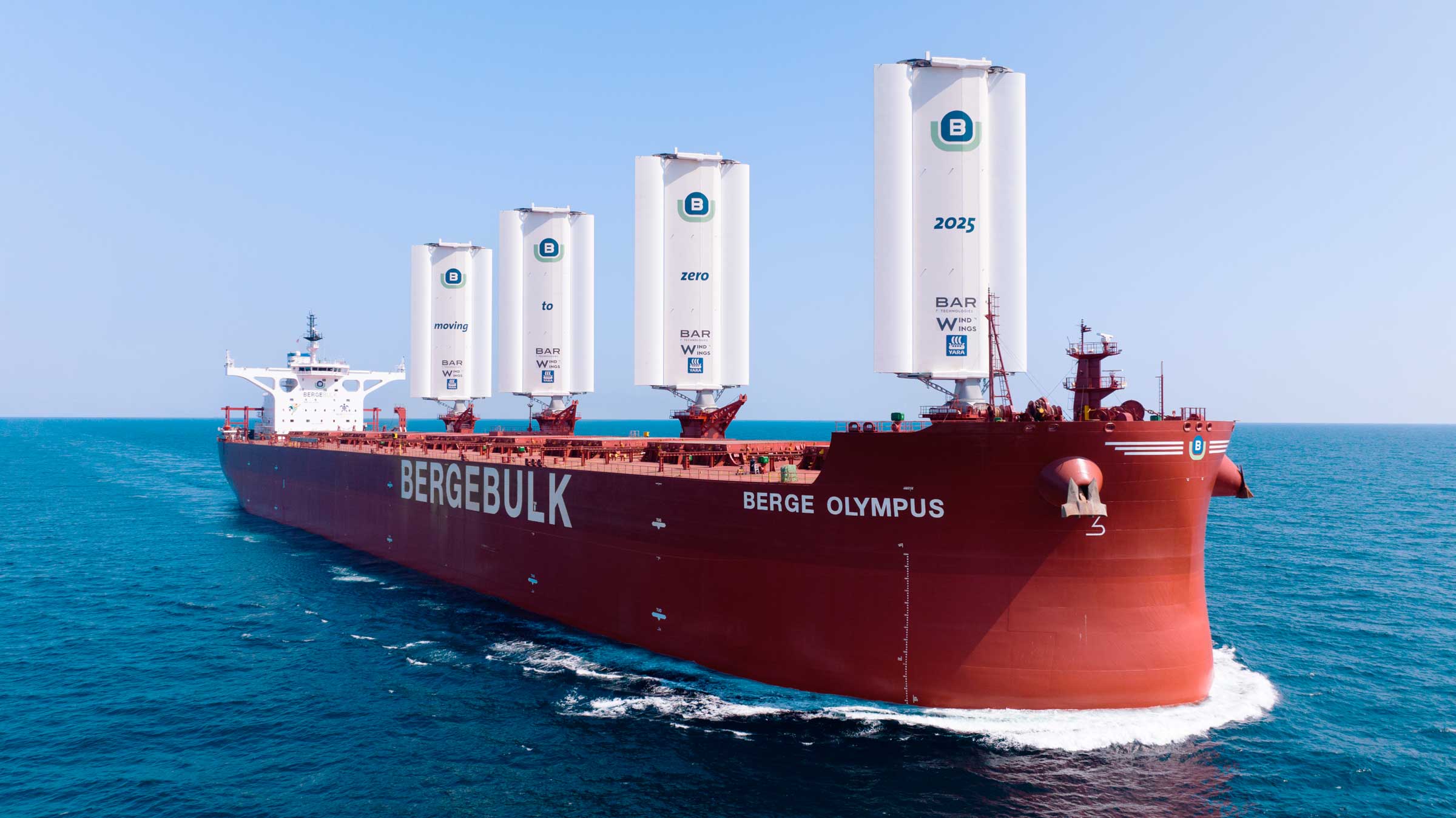
WindWings are operating on the bulk carriers Pyxis Ocean and Berge Olympus. DNV previously recorded a reduction of up to 32 percent in Pyxis Ocean’s main-engine energy use under favorable conditions. Union Maritime also has taken delivery of three WindWings-equipped LR2 tankers, with two more scheduled in 2027.
Wind propulsion could provide additional value by reducing CO2 emissions and improving Carbon Intensity Indicator performance, BAR said. The four-year calculation does not include possible benefits from carbon pricing or regulatory programs.
“The ships that have to burn less fuel this decade are the ones sailing now,” Cooper said.
Tags: BAR Technologies, Poten & Partners