







Archives
Feature, Freight News, Logistics, Sea
Carriers Face Finances, Overcapacity, Drewry
[ February 11, 2026 // Gary Burrows ]Global container shipping in 2026 is facing worsening overcapacity and sharply reduced profitability, according to a new report from Drewry, the London-based maritime research and consultant.
Drewry’s latest analysis, Container Shipping Financial Health Check 2026, warns that weakening carrier finances and continued fleet expansion will reshape market conditions for North American importers, exporters and third-party logistics providers, with implications for freight pricing, service reliability and long-term carrier stability.
The report traces the downturn to the sharp reversal of market conditions since 2024. That year, the Red Sea crisis forced many vessels serving Asia-North America and Europe-North America trades to reroute around the Cape of Good Hope, tightening capacity and driving freight rates sharply higher.
For North American shippers, the disruption translated into elevated transportation costs but strong carrier profitability and relatively stable service patterns.
By late 2024, however, capacity returned to the market as rerouted vessels normalized operations and large volumes of newbuilds were delivered. In 2025, the industry entered a clear overcapacity phase on major transpacific and transatlantic routes. Continued vessel deliveries and low scrapping activity pushed supply growth well ahead of demand, sending freight rates lower.
Drewry notes that North American cargo volumes received short-term support in 2025 from front-loading by retailers and manufacturers seeking to avoid potential tariff increases. At the same time, strong Chinese exports to emerging markets helped sustain global trade volumes.
However, this support is fading. The steady return of vessels to the Suez Canal route is effectively expanding global container capacity, particularly on Asia-U.S. East Coast services, increasing competition and putting further pressure on rates.
Financial Health Weakens
Drewry’s “Financial Health Check” of 12 major carriers, based on nine-month 2025 results, shows a broad decline in balance sheet strength. Altman Z-scores fell year-on-year, indicating that while most carriers remain financially stable, resilience has weakened. (Altman Z-score is a formula developed by Edward Altman in 1968 that uses five weighted financial ratios to predict the probability of a company going bankrupt within two years.)
Several major carriers serving North American trades – including Maersk, MSC, CMA CGM, COSCO and Hapag-Lloyd – reported steep earnings declines in 2024 and 2025 as rates normalized. Maersk’s EBIT margin, for example, fell from more than 40 percent in 2022 to low single digits by 2025.
The report highlights rising leverage as a growing risk. Industry-wide debt increased in 2025 as carriers sold investments and borrowed to finance fleet expansion. Orderbooks for several major lines expanded sharply, and Drewry expects debt levels to rise further in 2026 as earnings weaken.
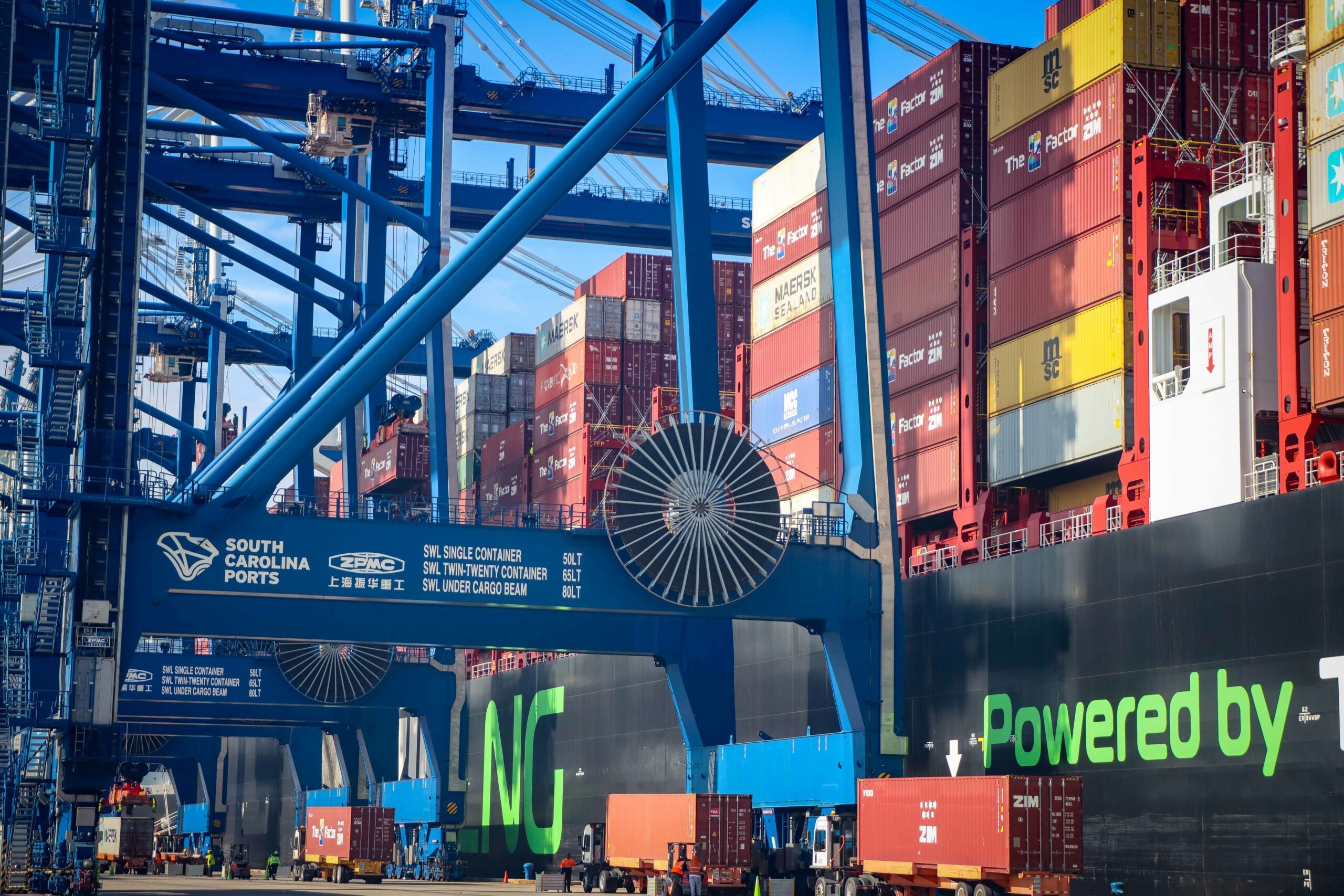
Environmental regulation is adding to cost pressures. European carriers have increased LNG-fueled vessel orders to prepare for stricter EU emissions rules, which will fully apply to maritime shipping in 2026. These investments are likely to raise operating and capital costs on key North American trade lanes.
Outlook for North American Shippers
Looking ahead, Drewry expects overcapacity to worsen through 2026 as fleet growth continues to exceed cargo demand. A full reopening of the Suez Canal could further expand effective supply and trigger a sharp decline in industry earnings.
For North American shippers and logistics providers, this environment is likely to bring continued downward pressure on freight rates, heightened competition among carriers and greater volatility in service networks. While most major lines still retain liquidity from the pandemic-era boom, Drewry concludes that the next two years will test carriers’ financial discipline and operational resilience in a more challenging market.
Tags: Altman Z-score, CMA CGM, Cosco, Drewry, Hapag-Lloyd, Maersk, MSC