






Archives
Feature, Freight News, Logistics, Sea
UNCTAD: Non-Tariff Impact Bigger Than Tariffs
[ May 19, 2026 // Gary Burrows ]A new report from the United Nations Conference on Trade and Development warns that regulations, technical standards and other non-tariff measures are becoming a greater obstacle to global trade than tariffs themselves, adding new complexity and costs across international supply chains.
The report, Invisible Barriers: The Costs of Non-Tariff Measures, says that while tariffs rose sharply in 2025 amid escalating geopolitical tensions and U.S.-led trade actions, non-tariff measures, or NTMs, continue to impose the largest overall costs on global exports.
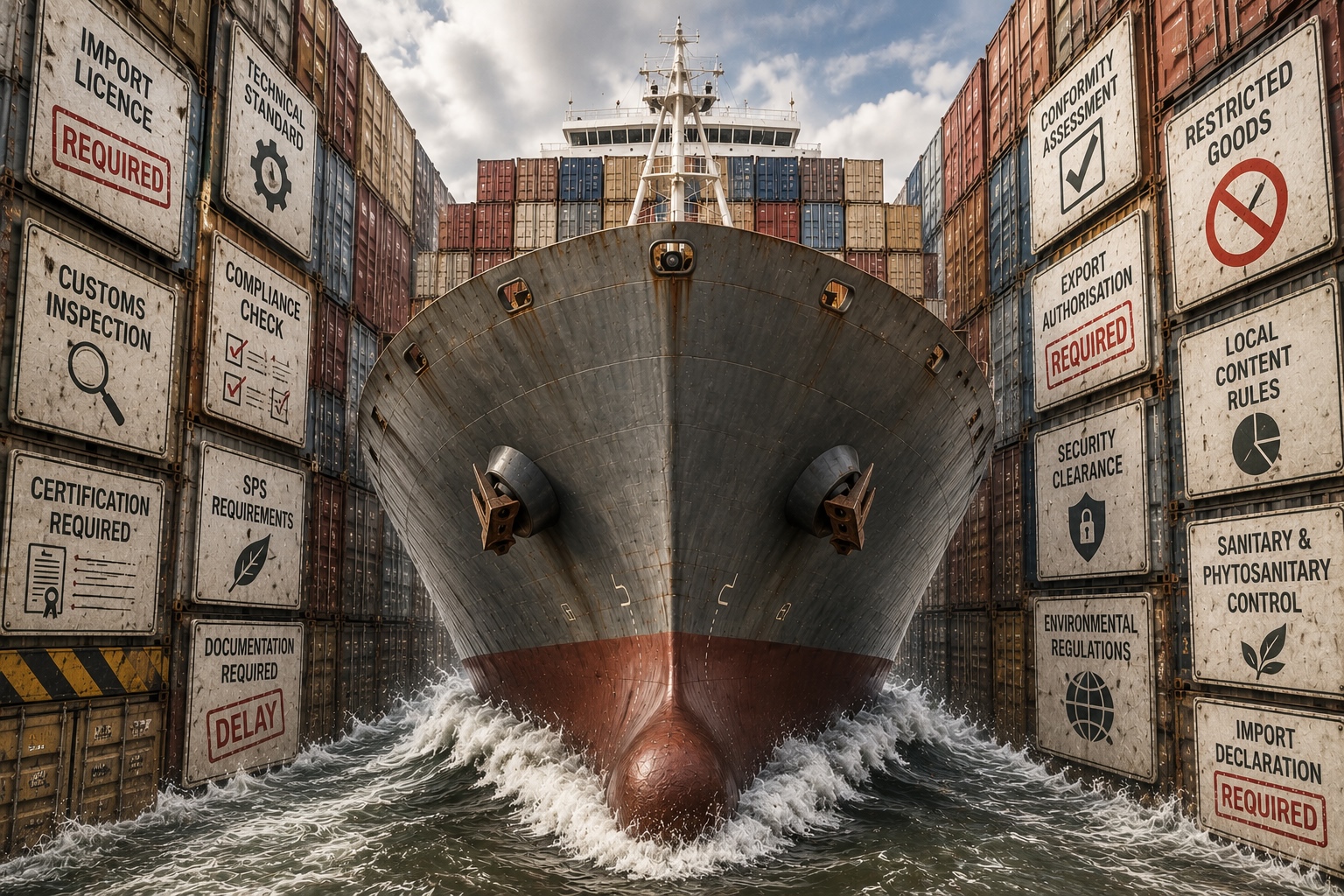
UNCTAD estimates NTMs now create greater export costs than tariffs for 88 percent of countries. The measures include product standards, licensing requirements, sanitary and phytosanitary rules, conformity assessments and other regulatory requirements tied to health, safety, environmental and security concerns.
For the shipping and logistics industries, the report highlights how supply-chain friction is increasingly being driven not only by tariffs, but also by expanding compliance requirements and diverging regulatory systems.
“The global trade policy landscape has shifted towards more interventionism,” UNCTAD said, pointing to the effects of the Covid-19 pandemic, the war in Ukraine and the latest round of U.S. tariff increases in 2025.
The report said governments are increasingly using trade policy to pursue industrial policy goals, strengthen supply-chain resilience and secure strategic industries and critical minerals.
Recent trade agreements negotiated by the United States have focused heavily on recognition of U.S. technical standards and certifications covering sectors including automotive, pharmaceuticals and agricultural products. Meanwhile, the European Union has emphasized broader regulatory alignment and mutual recognition agreements.
UNCTAD said the growing use of non-tariff measures is creating a disproportionate burden for developing economies, particularly smaller exporters lacking the technical infrastructure and compliance resources needed to navigate increasingly complex trade rules.
The organization cited research showing least-developed countries lose roughly 10 percent of exports to G20 markets because of their inability to comply with non-tariff measures.
The report also warned that lack of transparency around regulations is becoming a major trade barrier. Businesses often struggle to determine which rules apply in different markets, particularly smaller firms without dedicated compliance teams.
UNCTAD said improving transparency and regulatory cooperation could significantly reduce trade costs without weakening legitimate safety or environmental protections. Studies cited in the report suggest improved transparency alone could reduce trade costs tied to non-tariff barriers by about 19 percent.
For global supply chains, the report suggests competitiveness increasingly depends not only on transportation efficiency, but also on the ability to manage regulatory complexity, compliance requirements and geopolitical trade fragmentation.
Tags: UN Conference on Trade and Development