







Archives
Feature, Freight News
San Pedro Ports Ponder Cleaner Drayage Trucks
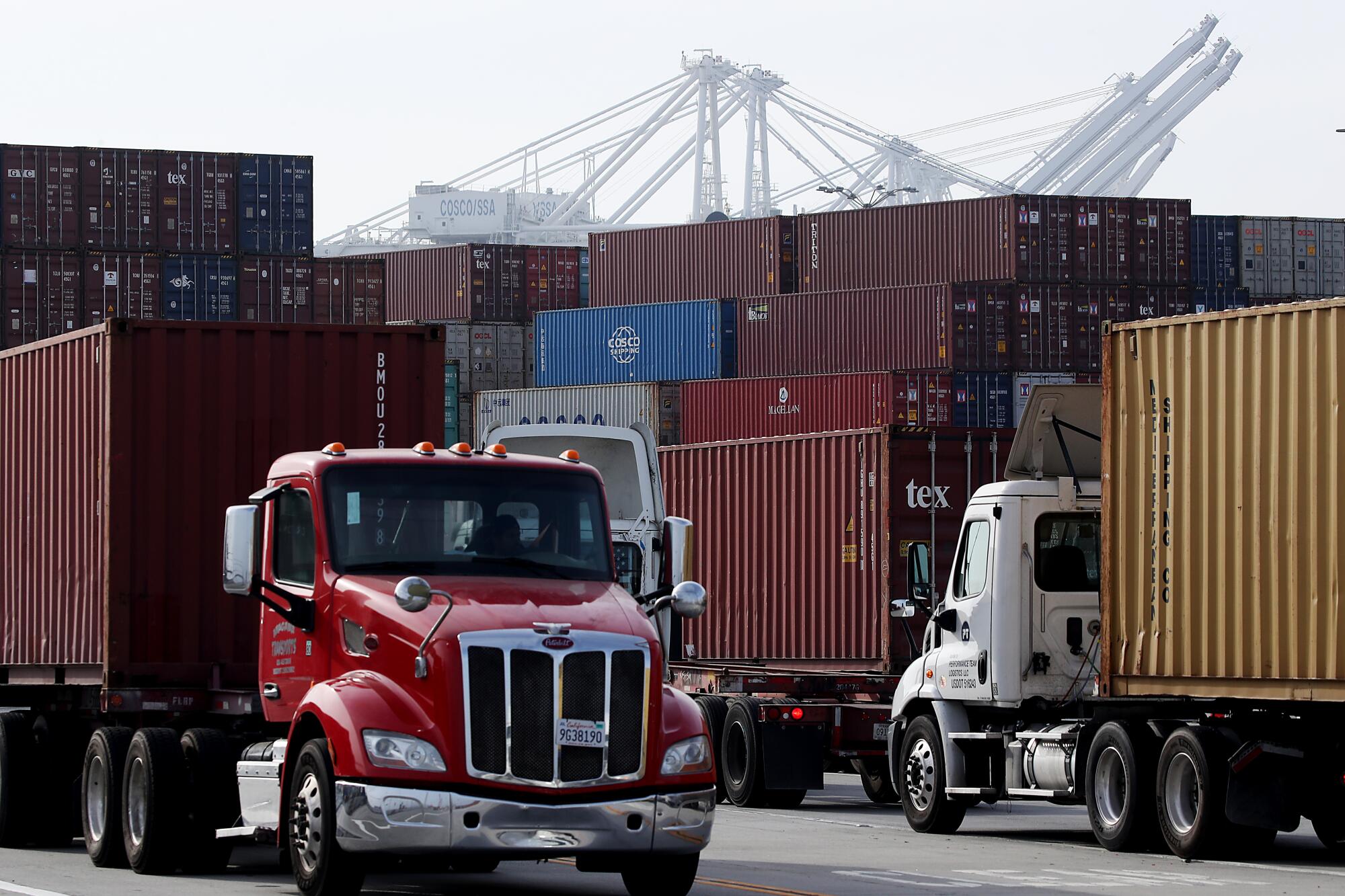
[ October 24, 2025 // Gary Burrows ]The ports of Long Beach and Los Angeles have released a final report on the state and feasibility of using cleaner drayage truck technologies to help reduce air pollution in the San Pedro Bay port complex and achieve zero-emissions (ZE) goals adopted in the 2017 Clean Air Action Plan (CAAP) Update.
The ports released a draft assessment in June ; previous assessments were conducted in 2018 and 2021. Following the CAAP framework for feasibility assessments, the 2024 report evaluated the feasibility of Class 8 ZE drayage trucks across five key areas: technical, commercial, operational, economic and infrastructure viability.
The 2024 report shows a continued increase in the feasibility of ZE trucks compared to the previous assessments, a trend also reflected in the more than 600 ZE vehicles in operation throughout the San Pedro Bay port complex.
The 2017 CAAP Update established goals of ZE trucks by 2035 and ZE terminal equipment by 2030. As part of this strategy, the ports committed to developing periodic feasibility assessments for drayage trucks and terminal equipment to inform the ports’ approach to meeting those goals.
The ports implemented the Clean Truck Fund Rate, collecting US$10 per twenty-foot equivalent unit from diesel trucks calling at the ports beginning in April 2022. A portion of the funding is allocated through CALSTART to help incentivize the purchase of ZE drayage trucks. The ports have also allocated funding to other programs, including partnering with state and local agencies, such as the South Coast Air Quality Management District, Mobile Source Air Pollution Reduction Review Committee, and California Air Resources Board, to leverage additional funding for ZE freight movement and accelerate regional deployment of ZE trucks and the necessary associated regional infrastructure using these funds.
Updated in 2017, the CAAP is a comprehensive strategy for accelerating progress toward a ZE future while protecting and strengthening the ports’ competitive position in the global economy. Since 2005, port-related air pollution emissions in San Pedro Bay have dropped 90 percent for diesel particulate matter, 70 percent for nitrogen oxides, and 98 percent for sulfur oxides. Targets for reducing greenhouse gases from port-related sources were introduced as part of the 2017 CAAP. The document calls for the ports to reduce GHGs 40 percent below 1990 levels by 2030 and 80 percent below 1990 levels by 2050. The CAAP was originally approved in 2006.
The ports of Los Angeles and Long Beach are the two largest ports in the nation, first and second respectively, and combined are the ninth-largest port complex in the world. Trade that flows through the San Pedro Bay ports complex generates more than 3 million jobs nationwide.
Tags: Clean Air Action Plan, Port of Long Beach, San Pedro