








Archives
Freight News, Logistics, Sea
Rail, EV Trucks Reshape Long Beach Inland Moves
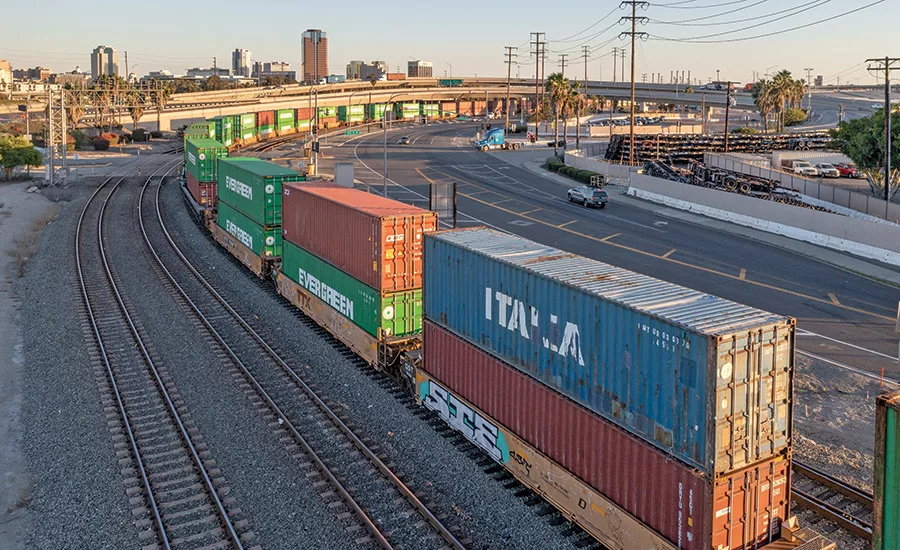
[ October 9, 2026 // Gary Burrows ]A combination of short-haul rail and zero-emission drayage is emerging at the Port of Long Beach as an alternative model for moving containers inland, as rising trucking costs and capacity constraints strengthen the economics of intermodal transportation.
Union Pacific’s service connecting the San Pedro Bay port complex with its Phoenix Intermodal Terminal now operates seven days a week, up from three when the terminal opened in April 2024. UP said volumes have more than doubled since the Phoenix facility began operating and the railroad is expanding the terminal to double its working capacity.
Duncan and Son Lines, which operates the Phoenix ramp, said more cargo is shifting from truck to rail as shippers become familiar with the service. On-dock rail moves containers between the ports and Phoenix, while trucks handle shorter moves at either end. The service is now integrated into inland point intermodal agreements, expanding its availability to international shippers.
The economics could increasingly favor that combination. Duncan and Son cited higher fuel, insurance and regulatory costs and tightening driver capacity as factors expected to raise over-the-road trucking costs. UP said rail also offers greater ability to absorb volume fluctuations.
The trucking portion of the equation is also changing. Duncan and Son currently operates 79 zero-emission trucks, primarily battery-electric models, and plans to add another 20 by year-end. That would put about 10 percent of its 1,000-truck fleet at zero emissions. The ZE trucks are concentrated in Southern California drayage, including the 125-mile Green Truck Corridor to Mexico announced by Long Beach in June.
Charging infrastructure is expanding with the fleet. Sister company 4 Gen Logistics is doubling its Long Beach charging depot from 30 to 60 high-speed chargers and expanding its Rialto facility from 14 to 30. The second phase, scheduled for completion by mid-2027, will include 10 megawatt chargers with pull-through lanes that Duncan and Son says could recharge trucks from about 20 percent to 80 percent in roughly 20 minutes.
The transition nevertheless remains at an early stage. In July, 613 zero-emission trucks called at Long Beach, representing about 3.6 percent of the 16,853 drayage trucks with access to San Pedro Bay terminals. Long Beach says more than 200 heavy-duty charging units are now operating or under construction within the port.
For 2026, DSL Logistics estimates the Phoenix rail service will reduce carbon emissions by more than 30,000 metric tons. UP estimates moving containers by on-dock rail to Phoenix can reduce greenhouse-gas emissions by as much as 75 percent compared with alternative movements.
Tags: Duncan and Son Lines, Port of Long Beach, Union Pacifioc