







Archives
Feature, Freight News, Logistics, Sea
Panama Canal Transits Climb Amid Hormuz Crisis
[ May 28, 2026 // Gary Burrows ]Ship traffic through the Panama Canal has risen sharply this year as disruptions tied to the Iran war and reduced transits through the Strait of Hormuz redirect global energy flows, according to BIMCO.
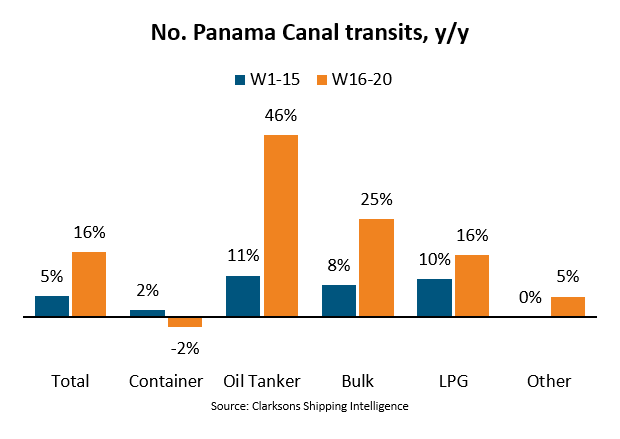
Average daily canal transits increased 8 percent year-over-year to 38 vessels so far in 2026, driven largely by tanker activity, said Filipe Gouveia, shipping analysis manager at BIMCO. Over the past five weeks, transits climbed 16 percent from a year earlier as U.S. energy exports to Pacific markets accelerated.
“The Iran war and the subsequent reduction in Strait of Hormuz transits have disrupted exports from the Persian Gulf, tightening the global energy supply and boosting prices for energy commodities,” Gouveia said. “This has contributed to a rise in U.S. energy exports to Asia and the west coast of the Americas, increasing demand for Panama Canal transit slots.”
The canal is now operating close to maximum capacity, with normal daily throughput ranging between 36 and 40 vessels. BIMCO said heightened demand has pushed up auction prices for last-minute transit slots while average waiting times have surged 50 percent year-over-year to roughly 47 hours.
Container ships, LPG carriers, oil tankers and bulk carriers account for about 77 percent of canal traffic. Operators on fixed schedules, particularly container lines, typically reserve slots in advance, while tanker and bulk operators often compete for later bookings and auctioned transits.
As congestion and costs increase, some shipowners may consider longer alternative routes via the Cape of Good Hope or Cape Horn despite higher bunker consumption, BIMCO said.
Further pressure could emerge in coming weeks as the Panama Canal Authority plans maintenance work on the east lane of the Panamax locks from June 9-17, temporarily reducing available transit slots.
BIMCO also warned that the potential emergence of El Niño weather conditions later this year could threaten canal operations by reducing rainfall levels feeding Gatun Lake, the canal’s primary water source.
During the last major El Niño event in late 2023 and early 2024, daily transits were reduced to as few as 22 vessels and maximum allowable draft restrictions were imposed as water levels fell sharply.
Tags: BIMCO