







Archives
Feature, Freight News, Logistics
Low-Value E-Commerce Enters New Customs Era
[ September 24, 2026 // Gary Burrows ]A global retreat from duty-free treatment of low-value e-commerce shipments is pushing billions of parcels toward more conventional customs processes, increasing data, duty collection and compliance requirements for sellers, marketplaces and logistics providers.
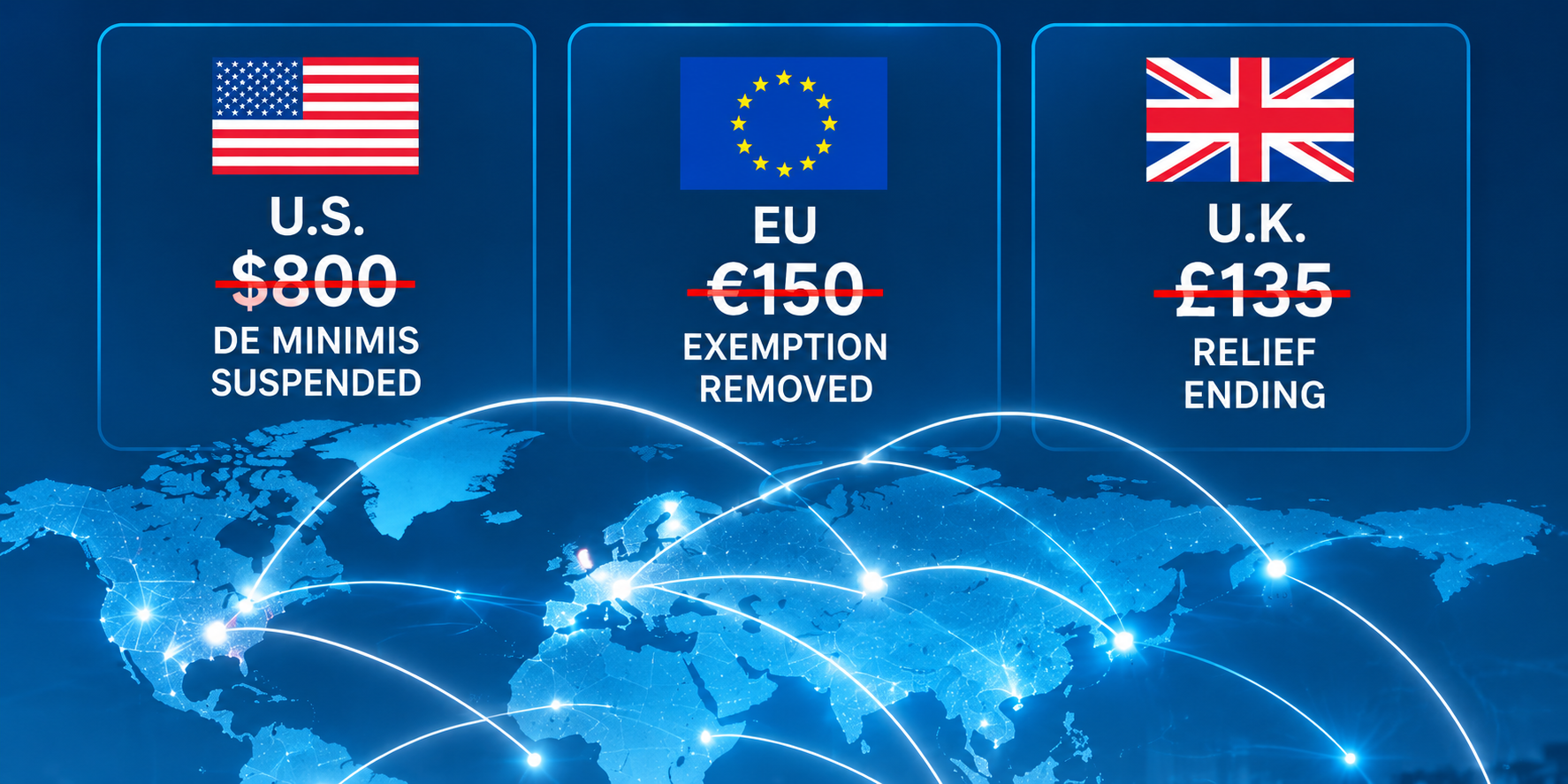
The latest pressure point is the U.K., where the government plans to eliminate customs duty relief for imports valued at £135 or less and replace it with a new low-value import system by October 2028. The timetable was accelerated by six months earlier this year, but important operational details remain unresolved.
The scale is substantial. About 600 million low-value consignments entered the U.K. in 2024, triple the 2021 volume, HM Revenue & Customs officials told Parliament this month. Separately, the government estimates about £5.8 billion of goods valued at £135 or less are now declared annually.
Under the proposed system, responsibility for paying customs duty would shift from parcel operators and intermediaries toward overseas sellers and online marketplaces, which would register for the new system and supply more detailed information about individual products.
Customs software provider Agency Sector Management this week called on Chancellor of the Exchequer John Healey to use his Oct. 28 Budget to commit to publishing remaining financial and technical details by June 30, 2027. ASM said the industry still needs final data requirements, technical specifications, testing schedules and the amount and basis of an additional fee expected under the system.
The government estimates the completed U.K. reform could raise about £500 million annually.
US, EU Move First
Britain is following a broader international shift that is already changing cross-border parcel logistics.
The U.S. suspended its US$800 de minimis exemption for shipments from all countries on Aug. 29, 2025. Non-postal shipments valued at US$800 or less are now subject to applicable duties, taxes and fees and require an appropriate customs entry through the Automated Commercial Environment. The suspension remains in effect in 2026.
That has moved low-value e-commerce shipments much closer to the customs treatment applied to conventional imports. Carriers are advising customers that accurate product descriptions, customs values and country-of-origin information have become increasingly important for even relatively inexpensive cross-border orders.
The European Union took another step July 1, abolishing its €150 customs-duty exemption and imposing a temporary €3 duty on low-value e-commerce imports. The charge applies by tariff classification within a parcel rather than simply once per package. Normal tariff rates are scheduled to replace the temporary system when the EU’s broader customs modernization is implemented.
The EU is also introducing a separate handling fee on small e-commerce consignments, with member states required to begin applying it no later than Nov. 1.
The volume behind those changes is even larger. EU customs authorities processed about 4.6 billion low-value e-commerce packages in 2024, twice the 2023 volume, with 91 percent originating in China.
There are already indications the new rules are altering e-commerce logistics. Polish retailer LPP told Reuters this week that online growth at its Sinsay brand accelerated after the EU duty took effect. Its finance chief also pointed to Chinese e-commerce companies establishing European warehouses, which can place inventory inside the customs border and shorten delivery times.
Customs Burden Moves Upstream
Although the U.S., EU and U.K. are using different systems, the direction is similar: low-value e-commerce is losing much of the exceptional customs treatment that helped support rapid direct-to-consumer parcel growth.
For logistics providers, the change is about more than duty. Greater requirements for item-level information, tariff classification, valuation and origin data push customs compliance farther upstream toward marketplaces and sellers while increasing the importance of accurate electronic information flowing to parcel carriers and customs intermediaries.
DHL, for example, is advising EU e-commerce customers to review product identifiers, customs values, electronic invoice data and responsibility for duties and taxes. Additional product identifiers become mandatory in the EU beginning Nov. 1.
The U.K. is attempting to build those requirements into its new system from the outset. HMRC told Parliament that it is not simply removing a duty exemption but developing a new customs process capable of collecting data and assessing risk across an enormous volume of postal and parcel traffic.
That complexity is behind ASM’s demand for an earlier implementation roadmap.
“Forwarders, customs intermediaries, parcel operators, and software providers cannot prepare properly until the data requirements, technical specifications, and testing timetable are confirmed,” said Simon Adams, program manager at ASM.
The U.K. has more than two years before its planned implementation. But with the U.S. exemption already suspended and the EU regime now in effect, the logistics systems that supported the rapid growth of duty-free, low-value cross-border e-commerce are already being rewritten.
Tags: Agency Sector Management, European Union, HM Revenue & Customs