







Archives
Feature, Freight News, Logistics, People
How Foreign-Trade Zones Can Cut Import Costs
[ September 18, 2026 // Gary Burrows ]FBJNA – How It Works, with Sandler, Travis & Rosenberg Trade Report – With U.S. tariffs increasing the cost and complexity of importing goods, companies are taking another look at a longstanding customs tool that can defer, reduce or, in some cases, eliminate duties: the foreign-trade zone.
Foreign-trade zones, or FTZs, are designated locations physically within the U.S. but treated as outside U.S. customs territory for purposes of customs entry.
That distinction allows imported goods to enter an FTZ without immediately triggering the duties that normally become payable when merchandise enters U.S. commerce.
According to international trade law firm Sandler, Travis & Rosenberg, companies can use FTZ procedures for activities ranging from storage and repackaging to assembly, processing, manufacturing, testing and repair before goods formally enter the U.S. market.
Here’s how the principal benefits work.
Defer the duty
A company importing components normally incurs customs duties when the merchandise enters U.S. commerce. If those components instead enter an FTZ, payment can generally be deferred until the merchandise leaves the zone for the U.S. market.
That can provide a cash-flow benefit when companies maintain substantial imported inventories.
Export it and avoid the duty
Foreign merchandise admitted to an FTZ generally is not subject to U.S. customs duties if it, or a product incorporating it, is subsequently exported rather than entered into U.S. commerce.
That can make FTZs particularly useful for manufacturers and distribution operations serving both domestic and export customers.
Move goods between zones
Foreign-status goods also can move between FTZ operations under customs bond without payment of duties.
A component, for example, could be used in manufacturing at one FTZ and the resulting product transferred to another FTZ for additional production. Duties would generally remain deferred until the finished merchandise entered U.S. commerce. If it were exported instead, the applicable U.S. customs duty could be avoided.
Reduce customs-processing costs
FTZ users also can qualify for procedures such as weekly entry, allowing multiple shipments leaving a zone to be consolidated into a single customs entry. That can reduce merchandise processing fees.
Direct-delivery procedures can also streamline movement of qualifying merchandise into a zone.
Understand the two basic FTZ models
Not every FTZ is a large logistics complex adjoining a port.
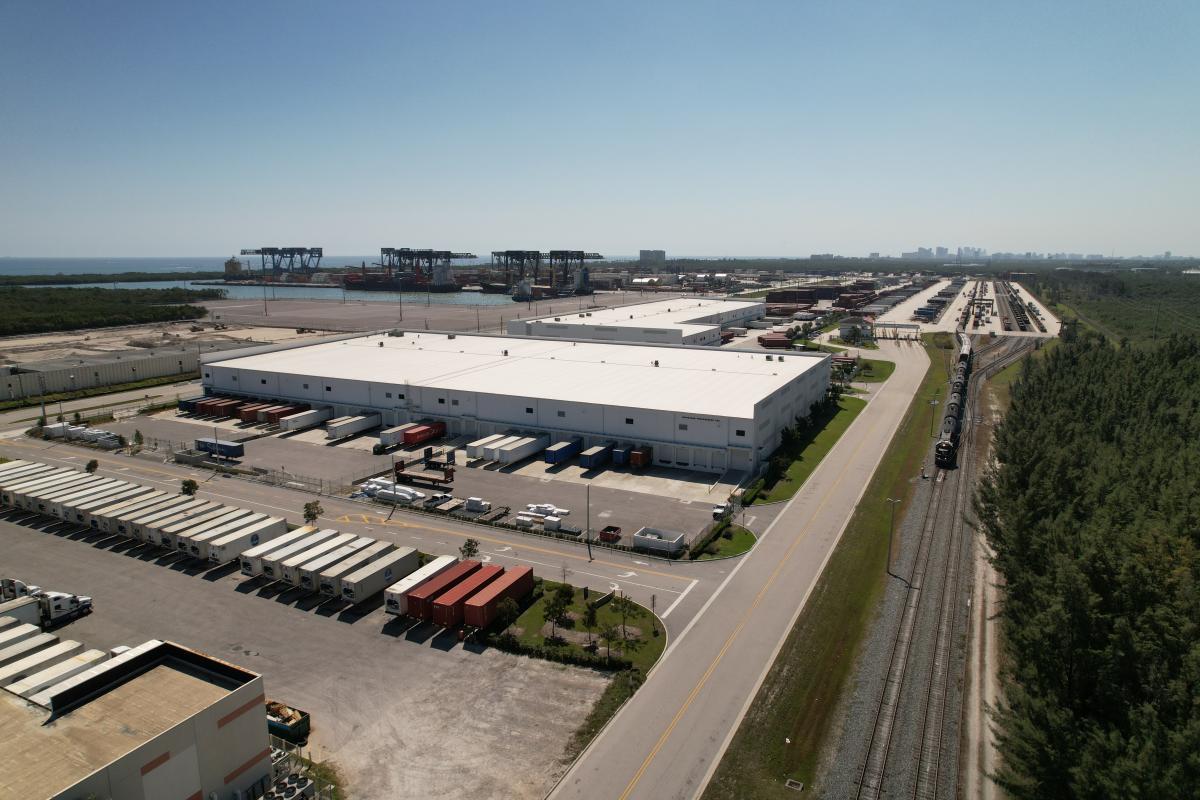
“Magnet sites” typically are located at ports, airports or industrial parks and provide FTZ space that can accommodate multiple users.
Subzones and usage-driven sites, by contrast, can be approved for individual companies or specific operations. ST&R says approval for some usage-driven sites can be obtained in as little as 30 days.
FTZ doesn’t mean regulation-free
The designation does not provide a way around U.S. import restrictions.
U.S. Customs and Border Protection oversees day-to-day FTZ activity, and a location granted FTZ status must still be activated by local CBP officials before zone operations begin.
Goods prohibited from entering the U.S. cannot be imported through an FTZ. Quotas, licensing requirements and regulations imposed by other federal agencies also continue to apply.
Manufacturing and other activities that substantially transform imported merchandise or change its tariff classification also may require production authority from the Foreign-Trade Zones Board.
When does an FTZ make sense?
The potential benefit depends heavily on a company’s import volume, inventory, manufacturing operations, export activity, tariff exposure and customs-processing costs.
But the basic calculation has become more important as tariffs increase: When does duty have to be paid, on what value and tariff classification, and does the merchandise ultimately enter the U.S. market at all?
For companies moving substantial volumes of imported merchandise, an FTZ can turn those questions into opportunities to improve cash flow and, under the right circumstances, reduce overall customs costs.
Tags: Sandler Travis & Rosenberg