








Archives
Freight News, Logistics, Sea
Grain Shipments Fall on Black Sea Disruptions
[ August 21, 2026 // Gary Burrows ]Grain exports from the region fell 26 percent over five weeks as attacks on ships and port infrastructure intensified, according to BIMCO.
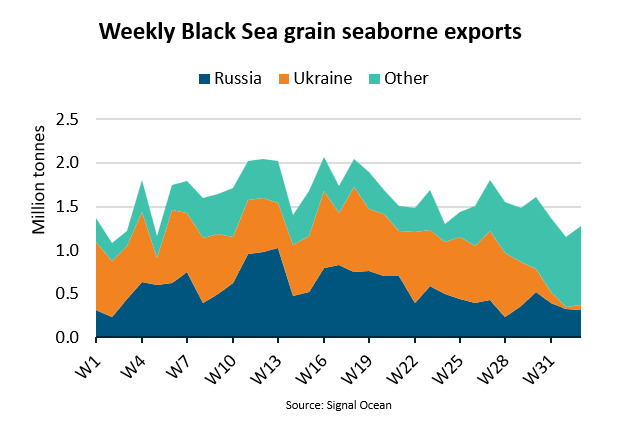
Global seaborne grain shipments declined 8 percent year over year during the five weeks spanning weeks 29 through 33, driven by a sharp reduction in exports from the Black Sea, BIMCO reported.
Black Sea grain shipments fell 26 percent from the corresponding period of 2025 as Russian and Ukrainian attacks on vessels and port infrastructure intensified. Delayed corn harvesting in Brazil also weighed on global volumes, according to BIMCO Shipping Analysis Manager Filipe Gouveia.
The attacks escalated following Ukraine’s launch of Operation MoLoChKa on July 6. The campaign initially targeted Russian-linked vessels in the Sea of Azov before expanding into the Black Sea. Russia subsequently intensified attacks on Ukrainian ports and merchant shipping, prompting a number of shipowners to suspend Ukrainian port calls, BIMCO said.
Russia rejected a Ukrainian proposal for both sides to halt attacks on civilian shipping in the Black Sea, reducing expectations for a near-term recovery in exports.
Although Black Sea ports represent only about 3 percent of global dry-bulk exports, they handle approximately 14 percent of seaborne grain volumes. Russia and Ukraine are major suppliers of wheat and corn to markets in Africa, the Middle East, Europe and Asia.
“Continued disruptions could therefore have a significant impact on food prices and supply,” Gouveia said.
Both countries are seeking alternative export routes. Russia has reportedly redirected some cargo through overland corridors and ports in the Caspian, Baltic and Far East, while Ukraine is looking to its Danube ports and Romanian gateways. BIMCO cautioned that rail and port constraints prevent those routes from fully replacing Black Sea capacity.
Restricted exports could also create a grain-storage shortage in Ukraine as harvesting continues. BIMCO cited a government estimate indicating that the country could face a storage deficit of as much as 11 million tonnes by November, increasing the risk of crop spoilage.
Tags: BIMCO