







Archives
Freight News, Rail, Road, Sea
Georgia Ports to Open Gainesville Inland Port
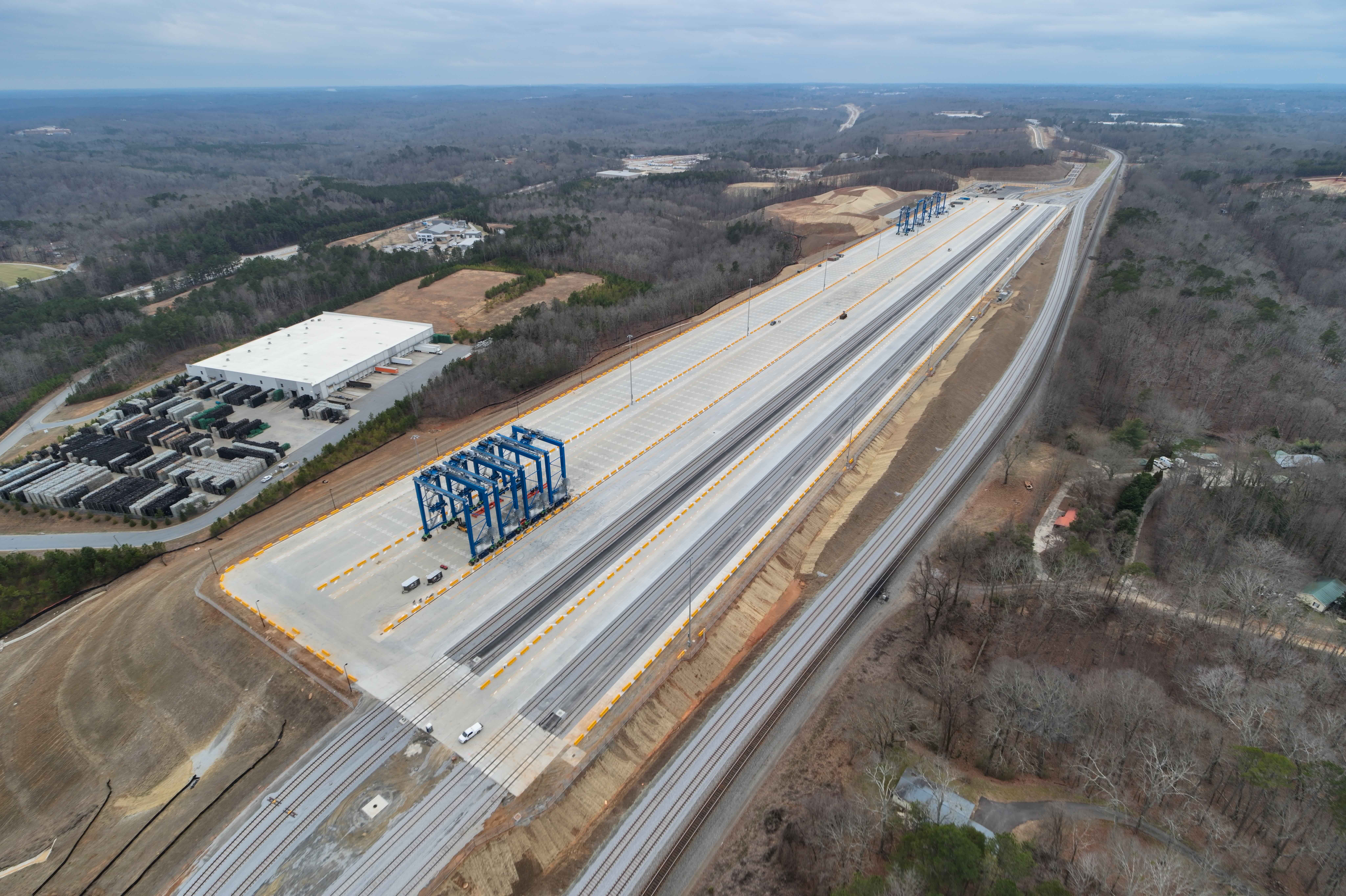
[ April 17, 2026 // Gary Burrows ]The Georgia Ports Authority will open a new inland rail terminal in Gainesville, Georgia, on May 4, expanding its logistics network as cargo volumes show signs of slowing.
The Gainesville Inland Port will connect Northeast Georgia manufacturers to the Port of Savannah via five-day-a-week rail service, providing an alternative to truck moves and reducing congestion on highways in the Atlanta region.
Port officials said the facility is expected to eliminate an estimated 26,000 truck trips annually while improving access to global markets for industries including poultry, heavy equipment and forest products.
The US$134 million facility will have an annual capacity of up to 200,000 containers at full build-out, forming part of a broader strategy to expand inland connectivity and support long-term supply chain growth.
The launch comes as the port authority continues work on a nearly US$5 billion infrastructure investment plan, including berth expansions, yard capacity and rail improvements in Savannah and Brunswick.
Among the largest projects is a US$1.6 billion redevelopment of Ocean Terminal in Savannah, where a new gate complex is scheduled to open later this year and the first phase of container operations is expected in 2027.
At the Port of Brunswick, maintenance dredging is nearing completion as part of ongoing efforts to maintain channel depth for roll-on/roll-off cargo operations.
At the same time, cargo volumes have softened. For the fiscal year to date through February, the Port of Savannah handled 3.73 million twenty-foot equivalent units, down slightly from the prior year. February volumes declined 7 percent year over year.
Brunswick’s roll-on/roll-off volumes also fell, with year-to-date units down more than 11 percent and February volumes declining nearly 20 percent, reflecting weaker demand for autos and heavy equipment.
Georgia Ports Chief Executive Griff Lynch said the authority expects volumes to remain under pressure in the coming months, even as long-term infrastructure investments continue.
The inland port is expected to improve supply chain efficiency and provide additional capacity as demand recovers, offering shippers more flexibility in routing cargo between inland markets and the coast.
Similar Approaches
Savannah’s inland push is part of a broader strategy adopted by several East Coast ports seeking to extend their reach into interior markets.
North Carolina Ports operates inland facilities in Charlotte and Rocky Mount, linking the Port of Wilmington to regional distribution corridors via rail and helping reduce first- and last-mile trucking costs while improving transit times.
South Carolina Ports Authority has pursued a similar model with inland ports in Greer and Dillon, which have supported cargo growth by connecting inland manufacturing clusters to the Port of Charleston and easing pressure on coastal terminals.
The Port of Virginia’s Inland Port in Front Royal, one of the earliest examples in the U.S., remains a benchmark for the model, demonstrating how rail-linked inland terminals can expand market reach and capture discretionary cargo.
While most of these facilities remain operational and, in many cases, expanding, their success has varied based on proximity to major markets, rail economics and sustained cargo volumes. Collectively, they underscore a long-term shift toward “bringing the port closer to the customer” as competition for inland freight intensifies.
Tags: Georgia Ports Authority, North Carolina Ports, Port of Brunswick, South Carolina Ports Authority