






Archives
Freight News, Logistics, People
GEODIS Brings History, Berlin Wall to Arkansas
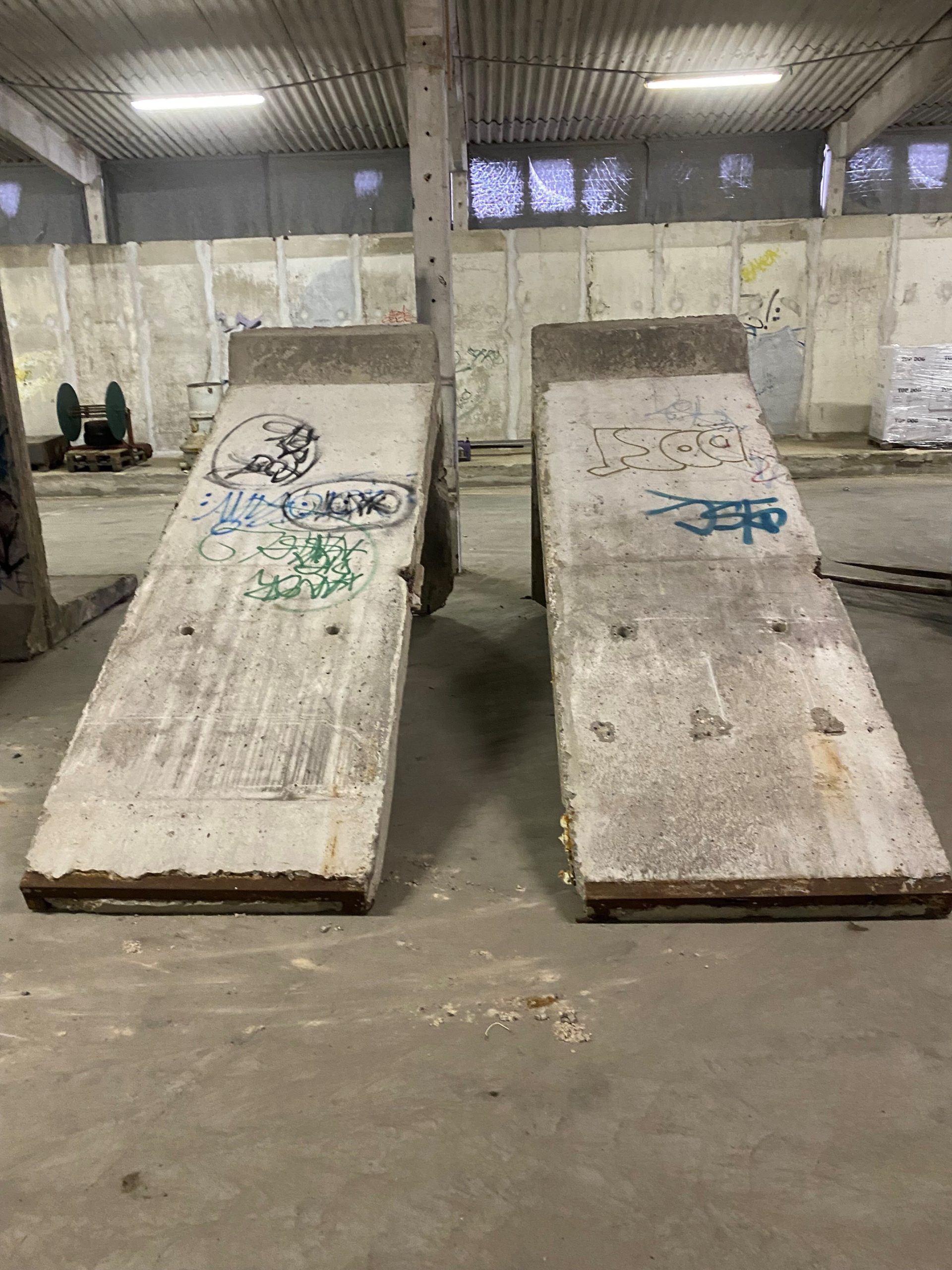
[ May 19, 2026 // Gary Burrows ]When an Arkansas museum approached GEODIS in late 2025 about transporting pieces of the Berlin Wall to the United States, the assignment quickly evolved into a carefully orchestrated multimodal project involving ocean shipping, rail transportation, trucking and extensive engineering coordination.
Over the following several months, the logistics provider developed and executed a transportation plan for 36 concrete wall segments weighing a combined 126 metric tons.
The operation ultimately moved the cargo from Germany to Arkansas via the Port of Hamburg, across the Atlantic to the Port of Savannah, onward by rail to Memphis and finally by truck to the museum site.
But long before the cargo ever departed Europe, planning had already become the centerpiece of the project, according to Christian Hanson, ocean export manager at GEODIS.
“In November, we immediately entered a planning period, identifying the best solution to transport 36 pieces of the Berlin Wall,” Hanson said. “This involved taking into account special considerations like the unique shape and weight of the pieces, as well as route optimization.”
The wall segments, each weighing nearly 3,500 kilograms, presented unusual loading and balancing challenges because of their asymmetrical dimensions and concentrated weight. Determining how many pieces could safely fit into each container — and how the weight could be distributed across multiple transport modes — required extensive engineering calculations.
“Our initial questions involved how many blocks could fit into one container as well as how they could be loaded based on the asymmetrical nature of the pieces,” Hanson said.
After multiple rounds of measurements and planning, the cargo was distributed among seven 40-foot containers, each carrying approximately five sections of the wall.
The containers were loaded between March 31 and April 1 and departed Hamburg on April 12.
Hanson said documentation and customs coordination became another critical element of the operation, particularly given evolving tariff considerations and the complexity of importing historical artifacts into the United States.
“We began facilitating all import and customs documentation for the end customer well in advance of the shipment’s departure to ensure a smooth process and total alignment with all applicable tariffs,” Hanson said.
After approximately three weeks crossing the Atlantic Ocean, the shipment arrived at the Port of Savannah in Georgia. From there, the containers were transferred directly from vessel to rail for inland transportation to Memphis, Tennessee, before being prepared for final truck delivery into Arkansas.
In total, the project took roughly five weeks door-to-door.
While the cargo itself carried obvious historical significance, Hanson said the move also underscored the importance of front-end engineering and modal coordination in specialized project logistics.
“Further calculations were then required to determine how the pieces could be loaded into the containers as well as onto each mode of transportation depending on structural balance needs and varying modal limitations,” Hanson said.
Despite the complexity of the move and the number of transportation handoffs involved, the project encountered only a minor vessel delay during transit.
GEODIS said all carriers and contractors involved in the operation were selected through the company’s approved vendor qualification process.
Tags: Geodis