








Archives
Feature, Freight News, Logistics, Sea
EU SAF Mandate Exposes Import Reliance
[ October 16, 2026 // Gary Burrows ]The European Union’s expanding sustainable aviation fuel mandate is exposing a reliance on imported feedstocks, raising questions about supply security and the development of domestic production capacity.
According to the European Union Aviation Safety Agency, 85 percent of the feedstocks used for SAF supplied at EU airports in 2025 originated outside the bloc. China accounted for 61 percent, followed by Malaysia at 8 percent and Indonesia at 5 percent.
About 80 percent of the SAF supplied was produced from used cooking oil through the hydroprocessed esters and fatty acids, or HEFA, pathway.
The findings come as ReFuelEU Aviation requires SAF to represent 6 percent of fuel supplied at EU airports beginning in 2030, including an average synthetic-fuel share of 1.2 percent during 2030 and 2031.
EASA said Europe could have sufficient production capacity to meet the overall 2030 requirement. Its outlook ranges from 1.5 million tonnes of currently available annual capacity to 5.5 million tonnes of announced SAF capacity, plus 600,000 tonnes of synthetic fuel. However, no large-scale synthetic-fuel facility had reached a final investment decision.
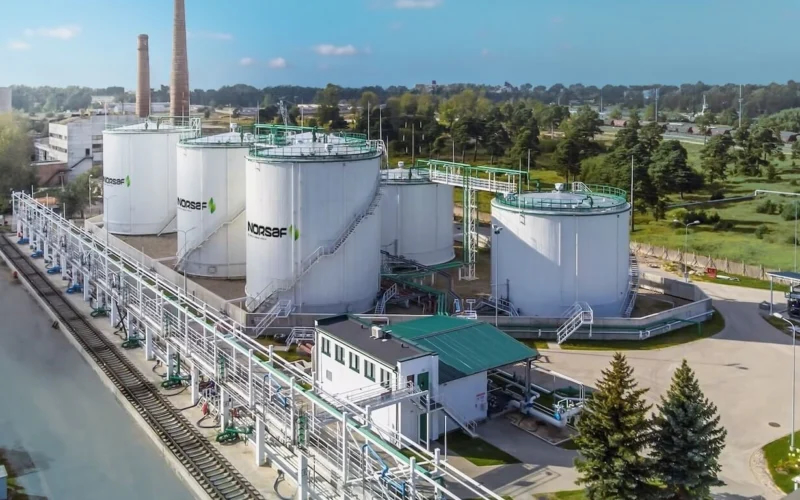
Latvian developer NorSAF warned that Europe could exchange its dependence on imported fossil fuels for reliance on foreign SAF feedstocks or finished fuel.
“We cannot simply replace one dependency with another,” said Janis Kisiels, NorSAF founder and board member.
NorSAF is developing a proposed SAF and synthetic-fuel plant in the Port of Liepāja. The project, which has not reached a final investment decision, is expected to produce 100,000 tonnes annually beginning in 2031.
The company is seeking policies supporting European feedstocks, long-term purchasing agreements and public risk-sharing for first-of-a-kind plants.
For air cargo customers, the availability and cost of SAF could influence airline fuel surcharges and the price of programs through which shippers purchase lower-emission transportation. The extent of that effect will depend on whether European production advances from announced projects to operating capacity.
Tags: EU Aviation Safety Agency, ReFuelEU Aviation