








Archives
Feature, Freight News, Logistics, Sea
CMA CGM Raises Panama Canal Surcharge
[ August 13, 2026 // Gary Burrows ]CMA CGM will increase its Panama Canal surcharge on Far East cargo moving to the U.S. East and Gulf coasts as reduced vessel drafts limit the amount of cargo ships can carry through the waterway.
The carrier’s Panama Canal Adjustment Factor will rise to US$500 per TEU effective Sept. 10, up from US$320 per TEU starting July 25. The charge applies to cargo routed through the canal, although shipments from Bangladesh to the U.S. East Coast are exempt.
CMA CGM’s customer notice provides little explanation for the increase, according to Drewry Maritime Research analyst Simon Heaney.
The Panama Canal Authority is progressively reducing the maximum authorized draft for vessels using the Neopanamax locks as part of its water-management preparations for possible El Niño conditions.
The final scheduled reduction will lower the maximum draft to 47.5 feet beginning Sept. 3, compared with the standard 50-foot limit. That represents a 5 percent reduction in permitted draft, although the resulting loss of container capacity will vary according to vessel design, cargo weight and stowage.
The canal authority has said the restrictions will not reduce the number of daily vessel transits. That does not mean cargo capacity will remain unchanged, Drewry said.
A vessel can continue to use its scheduled transit but may have to carry fewer containers to comply with the shallower draft. That reduces available capacity while increasing the carrier’s operating cost per loaded TEU.
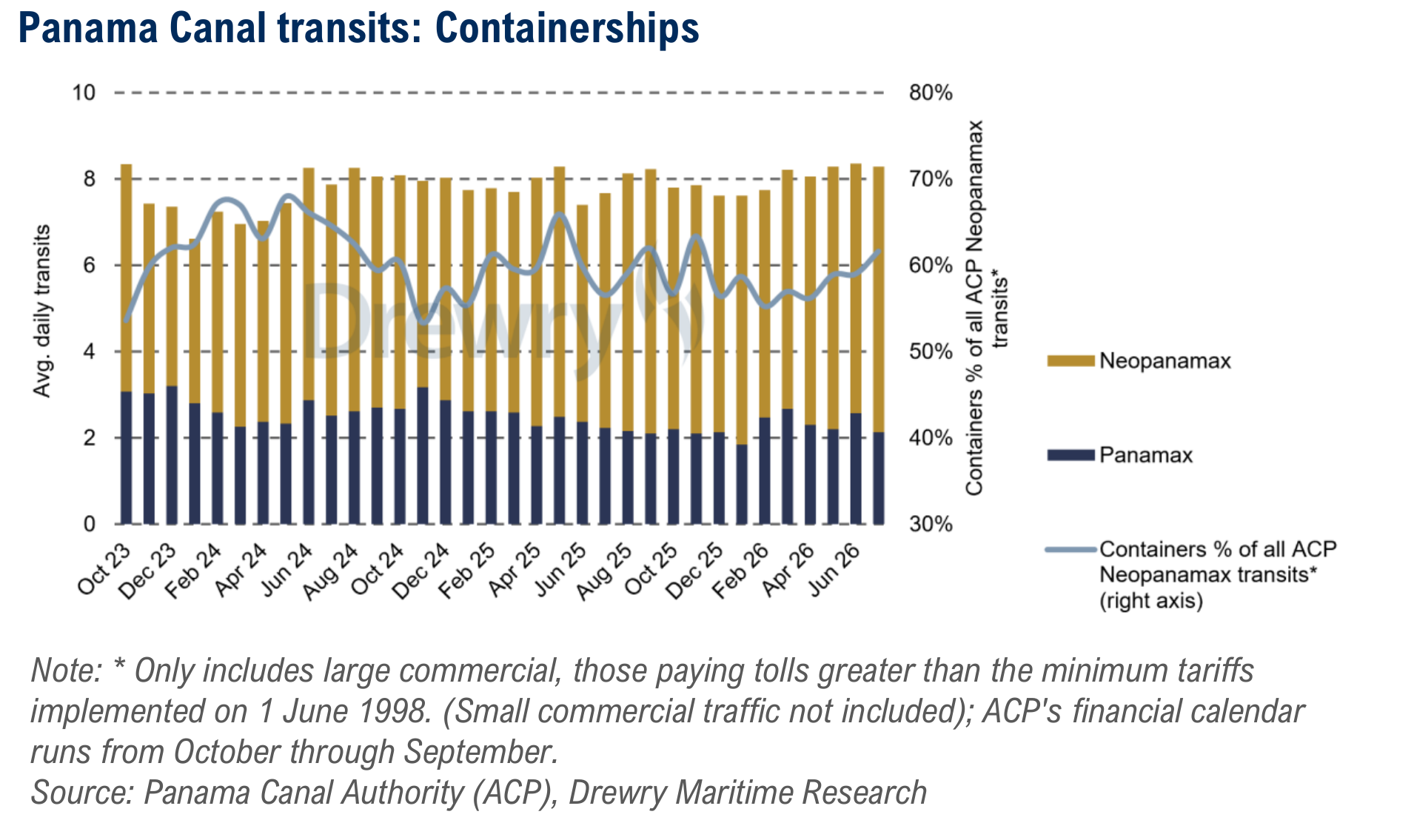
Container ships account for about 60 percent of monthly Neopanamax transits, according to Panama Canal Authority data compiled by Drewry.
Heaney said the lost cargo-carrying capacity could provide a reasonable basis for carriers to recover additional costs through surcharges. However, he criticized carriers for failing to explain how operational changes affect their costs or how individual surcharge amounts are calculated.
The Panama Canal imposed more severe water-related restrictions during 2023 and 2024, when fewer available transit slots contributed to sharply higher auction fees for some vessel segments. The current measures differ because the canal authority intends to maintain daily transit numbers while managing water consumption through draft restrictions.
Drewry said the episode reflects a broader lack of transparency surrounding container carrier surcharges, contributing to mistrust between shipping lines and their customers.
Tags: CMA CGM, Drewry Maritime Research