







Archives
Feature, Freight News, Logistics, Sea
AMP Questions US Jones Act Waiver Strategy
[ June 4, 2026 // Gary Burrows ]The Trump administration’s emergency Jones Act waiver is facing growing criticism from maritime industry groups and members of Congress who argue the policy conflicts with the administration’s broader efforts to rebuild the U.S. maritime sector and reduce dependence on foreign shipping.
What began as a temporary response to supply disruptions following the outbreak of the Iran war has evolved into a larger debate over national security, domestic shipbuilding and the role of foreign-owned vessels in U.S. coastwise trade.
The Jones Act requires cargo transported between U.S. ports to move on vessels that are U.S.-built, U.S.-owned, U.S.-flagged and primarily crewed by American mariners. In March, the administration issued an emergency waiver allowing certain foreign-flag vessels to move energy-related cargoes between domestic ports, citing disruptions to global oil markets resulting from the Strait of Hormuz crisis. The waiver was later extended through mid-August.
The American Maritime Partnership (AMP), which represents domestic vessel operators, shipbuilders and maritime labor organizations, has launched a national advertising campaign urging President Donald Trump to end the waiver.
“Clearly, President Trump has been led to believe that waiving the Jones Act is an effective way to lower gas prices, when we all see that prices have not gone down with the waiver,” AMP President Jennifer Carpenter said in announcing the campaign.
The group argues the waiver has delivered little measurable benefit to consumers while allowing foreign operators to perform domestic transportation work that would otherwise be reserved for American vessels and mariners.
The dispute has expanded beyond industry advocacy into Congress.
In a May 15 letter to President Trump, Rep. Rick Larsen, ranking member of the House Transportation and Infrastructure Committee, and Rep. Salud Carbajal, ranking member of the Coast Guard and Maritime Transportation Subcommittee, questioned whether voyages approved under the waiver satisfy the legal requirement that they address an “immediate adverse impact on military operations.” The lawmakers argued the waiver has failed to lower fuel prices while creating economic and national security concerns for the domestic maritime industry.
The lawmakers requested detailed information on how each approved voyage directly supported military operations and sought documentation showing how federal agencies determined there were insufficient qualified U.S.-flag vessels available to meet national defense requirements without the waiver.
The criticism places the administration in an unusual position.
Since returning to office, Trump has repeatedly emphasized rebuilding U.S. manufacturing, strengthening domestic shipbuilding capacity and reducing strategic dependence on China. Earlier this year, the administration unveiled its Maritime Action Plan, a framework aimed at revitalizing the U.S. maritime industrial base.
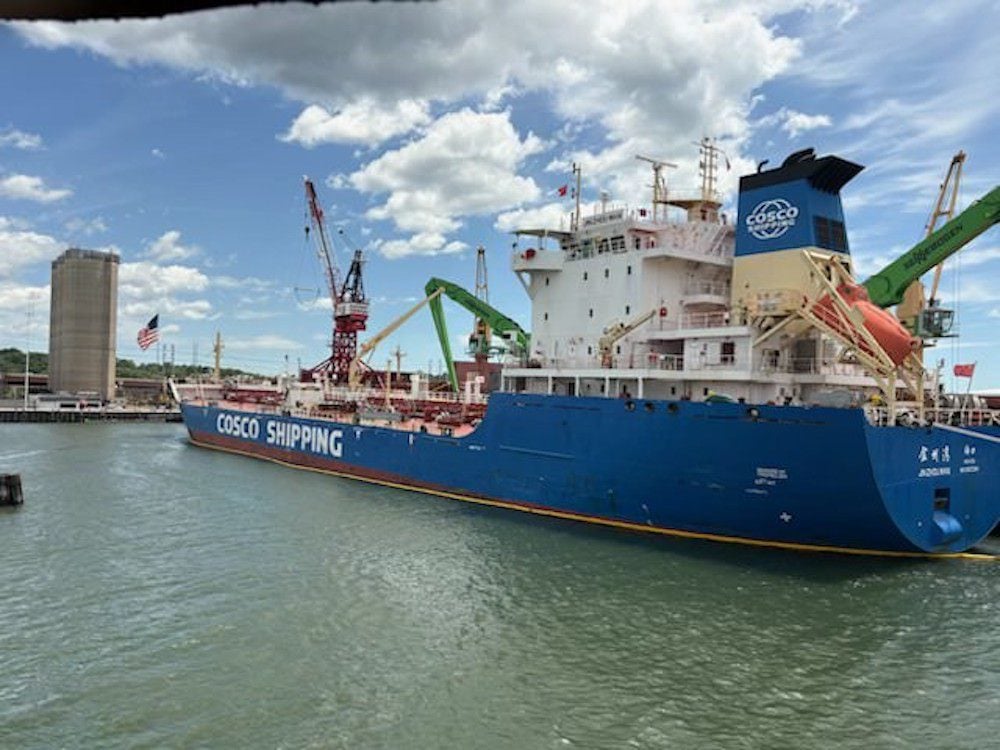
Critics contend the Jones Act waiver appears inconsistent with those objectives by permitting foreign vessels, including some linked to Chinese state-owned enterprises, to participate in domestic U.S. trades.
“The Jones Act waiver and its subsequent extension represent a direct threat to the American maritime industry,” Larsen and Carbajal wrote, arguing that the waiver undermines the administration’s own maritime policy goals.
Supporters of the waiver counter that the measure remains a temporary emergency tool designed to ensure adequate movement of energy products during a period of geopolitical disruption. The administration has maintained that the waiver provides flexibility while global oil and refined product flows remain affected by the Middle East conflict.
The debate increasingly centers on how broadly the national security justification should be interpreted.
Maritime industry advocates argue that some approved cargoes appear only loosely connected to military requirements, while supporters contend that maintaining reliable domestic energy supplies during a crisis is itself a national security objective.
The issue is likely to remain contentious as lawmakers pursue oversight of waiver approvals and as maritime groups continue their campaign against the policy.
At stake is more than a temporary transportation measure. The dispute has become a test of how the administration balances immediate supply-chain concerns against long-term efforts to rebuild American maritime capacity.
For an administration that has repeatedly promoted an “America First” industrial strategy, critics argue the Jones Act waiver raises a fundamental question: Can the United States simultaneously champion a revival of domestic maritime industries while expanding opportunities for foreign-flag operators in domestic trade?
The answer could shape not only the future of the current waiver but broader debates over maritime policy, shipbuilding investment and national security for years to come.
Tags: American Maritime Partnership