








Archives
Feature, Freight News, Logistics, Sea
Suez Return Could Pressure Charter Markets
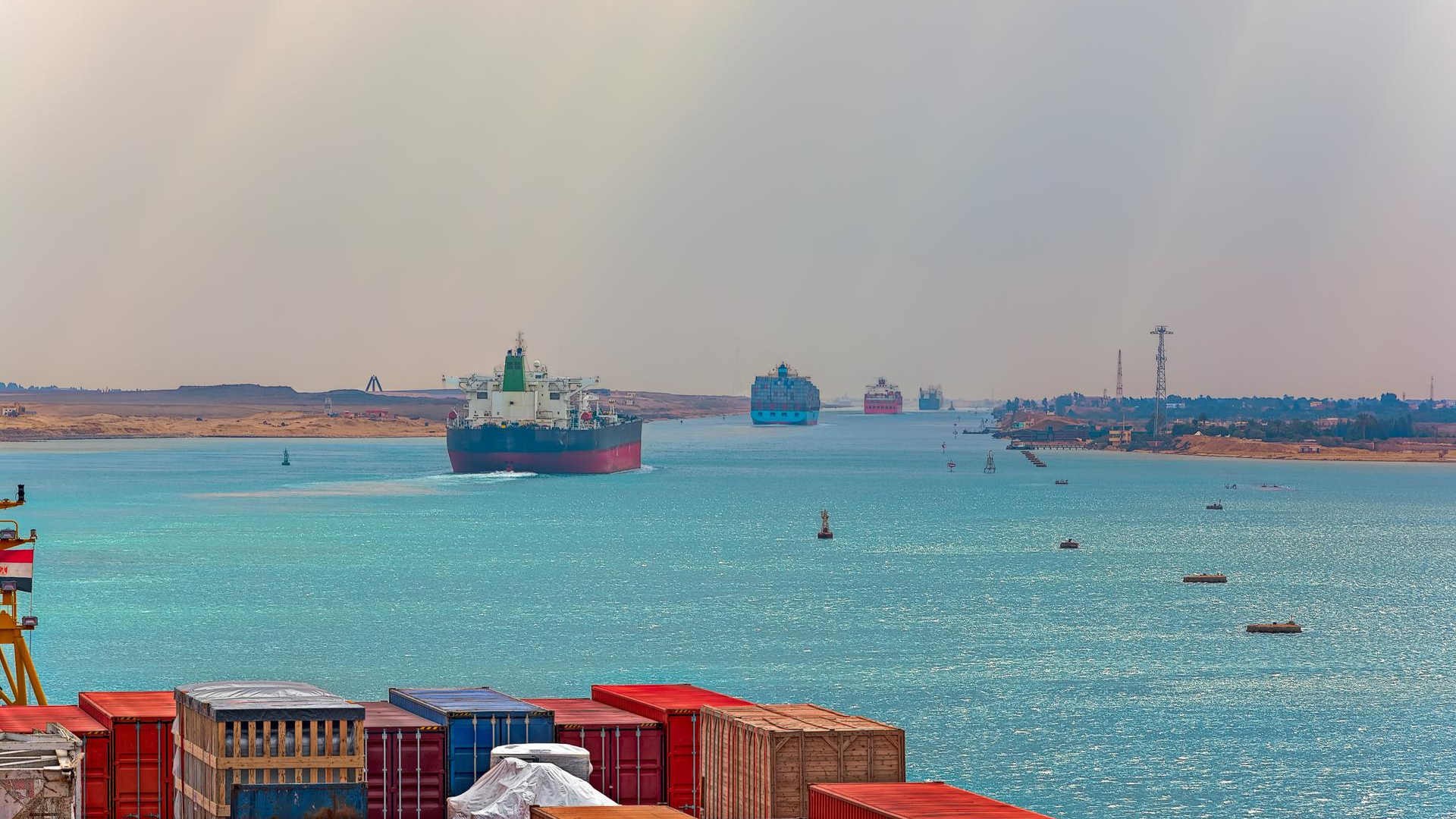
[ October 16, 2026 // Gary Burrows ]The container shipping industry’s return to the Suez Canal could weaken time-charter markets and eventually place additional pressure on freight rates as carriers absorb capacity released from longer Cape of Good Hope routings, BIMCO Chief Shipping Analyst Niels Rasmussen said.
Container ship capacity transiting the canal averaged 753,000 TEUs per week during the first two weeks of October, exceeding 50 percent of pre-Red Sea disruption levels for the first time since Houthi attacks began. Capacity averaged 1.46 million TEUs during the corresponding period in 2023.
“Since the Houthi attacks began in the Red Sea, this is the first time that transits have exceeded 50 percent of pre-disruption levels,” Rasmussen said.
Rerouting around southern Africa increased global container ship demand by about 10 percent, according to BIMCO. That additional demand is now falling as carriers restore Suez services, but Rasmussen said the resulting capacity adjustment will unfold gradually.
Most ships that could be released are large mainline vessels owned by carriers or operating under long-term charters, making carriers likely to keep them employed. Large mainliners also are sailing about 0.25 knots faster than in 2023, giving operators room to add vessels to existing rotations and reduce speeds.
Further cascading nevertheless appears likely. With 123 ships larger than 12,000 TEUs scheduled for delivery during 2026 and 2027, carriers could use owned or long-term-chartered mainliners to replace smaller chartered vessels, then return the smaller ships to their owners.
That process could create supply-demand imbalances on individual trade lanes and place selective pressure on freight rates. Rasmussen expects the more immediate effect, however, to be weaker time-charter markets.
Lower charter rates could eventually encourage carriers to expand networks and capacity, particularly while profits remain strong. Released ships therefore may find new employment, adding capacity and increasing freight-rate pressure unless cargo growth exceeds expectations.
The adjustment is unlikely to be completed within several months. During the transition, the market could experience a combination of selective freight-rate pressure, additional blank sailings and increased vessel idling.
The return to Suez accelerated after Gemini partners Maersk and Hapag-Lloyd announced July 6 that their AE15/SE3 Asia-Mediterranean service would resume canal transits. Gemini has since announced five additional service returns, while MSC and members of the Ocean and Premier alliances also have announced routing changes.
BIMCO said changes involving 16 services have been announced since early July. During the first two weeks of October, 36 percent of capacity routed through either Suez or around the Cape used the canal, up from an average of 8 percent between 2024 and mid-2026 but below the pre-disruption level of 80 percent.
Tags: BIMCO, Hapag-Lloyd, Maersk, MSC