







Archives
Feature, Freight News, Logistics, Sea
Volatile 2027 Forces Shippers to Rethink Tender
[ September 24, 2026 // Gary Burrows ]Ocean freight procurement teams are rethinking the annual tender as volatile rates, unpredictable surcharges and inconsistent carrier performance make it increasingly difficult to build a freight budget that can survive an entire year.
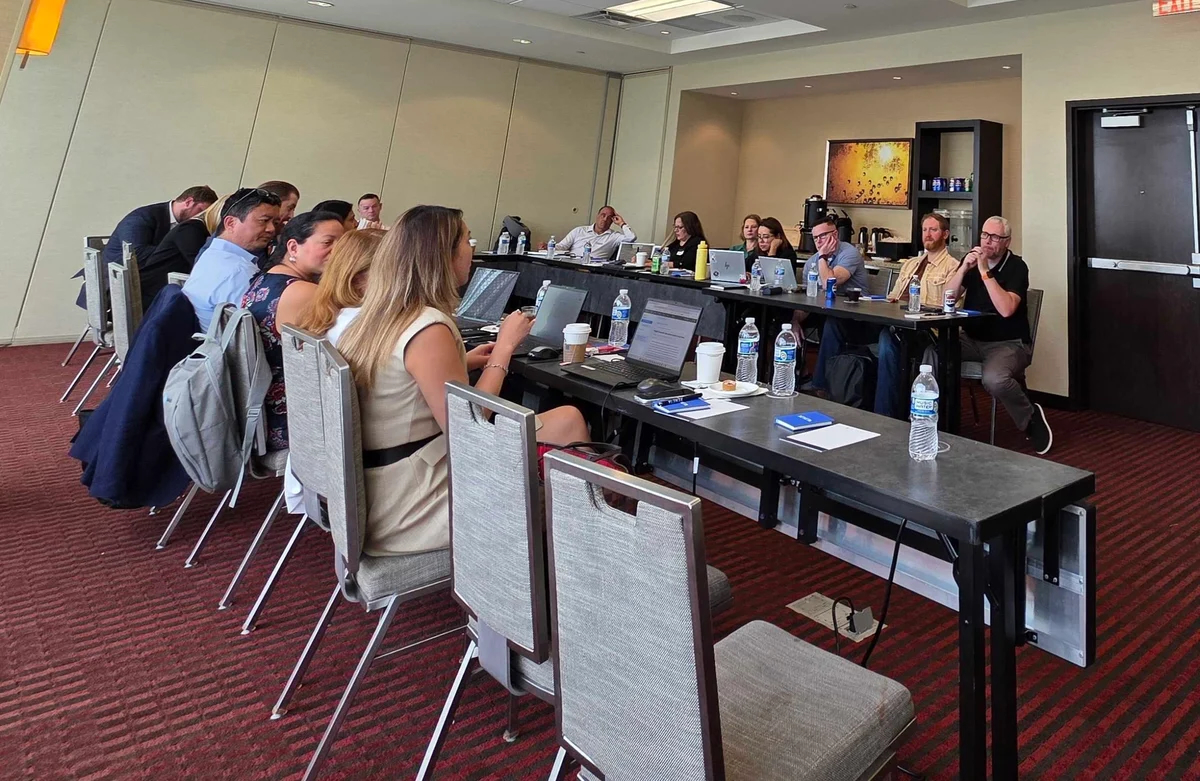
That was a common theme from recent Xeneta shipper roundtables in Atlanta, Houston and London, where procurement executives described moving toward shorter contracting cycles, indexed rates and hybrid strategies combining long-term contracts with market-linked pricing.
The discussions suggest the challenge facing shippers in 2027 may be less about determining whether freight rates rise or fall than establishing transportation budgets capable of absorbing frequent market changes.
Several shippers are pursuing a strategy that fixes about 80 percent of volume under long-term rates while indexing the remaining 20 percent, particularly volumes above minimum quantity commitments, according to Xeneta. Others expect procurement to move toward more frequent mini-tenders.
The shift predates the latest roundtables. Xeneta customer surveys found preference for 12-month contracts fell from 52 percent to 43 percent between 2023 and 2024, while preference for three- to six-month contracts doubled from 13 percent to 26 percent.
Surcharges emerged as the leading complaint across the roundtables. Shippers said carriers frequently fail to provide clear triggers or calculations for surcharges, or specify when the charges should be reduced or removed.
The issue has become more pronounced during this year’s disruptions. Xeneta reported three waves of surcharges in six months, including emergency fuel charges following the Strait of Hormuz disruption and peak-season surcharges of US$500 to US$1,200 per container, with some announcements reaching US$2,000/FEU.
Xeneta said surcharges on the Far East-Mediterranean trade increased 113 percent between February and July even as bunker fuel prices remained flat. Panama Canal charges also varied significantly, with some carriers charging as much as three times more than others for the same transit.
The amount announced by a carrier also may bear little resemblance to what ultimately gets paid. Xeneta data shows Southeast Asia-North Europe fuel surcharges ranging from US$190 to US$770/FEU. The company said many shippers negotiated emergency and peak-season surcharges substantially below announced levels or eliminated them altogether.
Shippers increasingly are challenging the charges. Xeneta said about a quarter of surcharge discussions involved active negotiation during the 2024 Red Sea crisis. In 2026, that share has ranged from 38 percent to 47 percent, reaching nearly half during the second quarter.
Some shippers have responded by moving from quarterly to monthly bunker adjustments, accepting potentially higher costs in return for greater visibility. Others are negotiating all-in rates.
The findings underscore a growing distinction between benchmark freight rates and the transportation costs ultimately paid by cargo owners.
Service reliability is also moving into contract negotiations. Shippers increasingly want lane-level performance measures rather than broad carrier schedule-reliability figures that may mask wide variations in actual delays.
Houston participants, for example, considered arrival within five days acceptable on a six-week Asia-U.S. movement, while variations of as much as 10 days were viewed as increasingly normal.
Participants also cited Maersk and Hapag-Lloyd’s Gemini Cooperation as evidence that better reliability is achievable. Xeneta, citing Sea-Intelligence, said Gemini’s reliability fell from 89.5 percent in December-January to 76.8 percent in February-March, but remained about 39 percentage points ahead of the next-best alliance group at its first-quarter low.
For some shippers, allocation execution is becoming as important as schedule reliability. Houston participants said blank sailings and inconsistent booking acceptance can erode contracted allocations, prompting procurement teams to monitor whether carriers actually provide the capacity awarded during a tender.
The budgeting process itself is changing. Xeneta said most procurement teams represented in the roundtables could forecast freight costs with reasonable confidence for only about three months, while companies increasingly want rolling 12-month projections.
Rather than trying to eliminate uncertainty, some shippers are separating budget variances into four components: cargo volume, trade-lane mix, price changes, including surcharges, and macroeconomic effects such as foreign exchange and inflation. The approach allows procurement teams to explain why actual spending departed from budget instead of treating the difference as a single forecasting error.
For 2027, Xeneta said participants generally expected flat to modestly higher ocean and air freight rates, but with substantial uncertainty surrounding that baseline.
Ocean shipping variables include whether Red Sea and Suez Canal routings normalize, whether recent demand and frontloading subside and how quickly new vessels enter the market.
Those forces could pull in opposite directions. BIMCO’s September container shipping outlook expects fleet supply to grow faster than cargo demand in 2027, with about 3.2 million TEU of new capacity scheduled for delivery. A broader return to Suez routing would release additional effective capacity now absorbed by longer voyages around the Cape of Good Hope.
But additional vessel capacity may not make shipper budgets more predictable. The Xeneta discussions indicate surcharges, allocation, schedule performance and geopolitical disruption can increasingly separate the freight rate negotiated in a tender from the transportation cost ultimately incurred.
For procurement departments, 2027 could simultaneously be a softer ocean freight market and a harder freight budget to build.
Tags: Gemini Cooperation, Hapag-Lloyd, Maersk, Xeneta