







Archives
Feature, Freight News, Logistics, Sea
Export Disruptions Weigh on Tanker Demand
[ August 28, 2026 // Gary Burrows ]Tanker demand is weakening as disruptions to oil exports from the Persian Gulf, Red Sea and Russia reduce seaborne cargo volumes, according to BIMCO’s August Tanker Shipping Market Overview and Outlook.
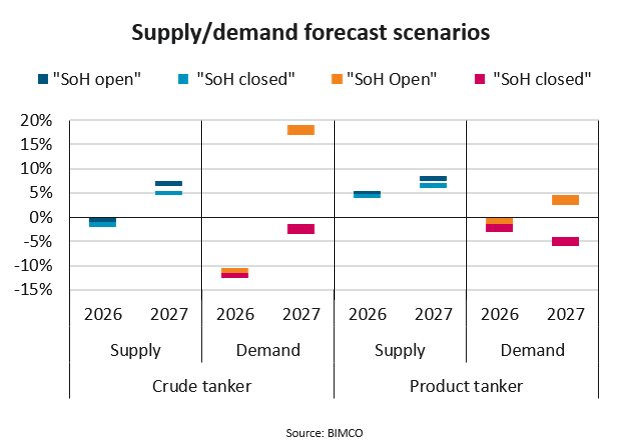
BIMCO forecasts crude tanker demand will fall 10.5 percent to 12.5 percent in 2026 if conditions in the Strait of Hormuz begin gradually normalizing during the fourth quarter. Demand could then rebound 17 percent to 19.5 percent in 2027 as exports recover and depleted oil inventories are rebuilt.
“Tanker markets are facing mounting pressure as export disruptions continue to curb seaborne volumes, while declining oil stocks raise the risk of higher oil prices, of weaker economic growth and lower tanker demand,” said Niels Rasmussen, BIMCO chief shipping analyst.
Year-to-date oil and heavy-product exports have fallen 5.7 percent year over year, while clean-product exports are down 11.2 percent. Crude tanker tonne-mile demand has dropped 10.3 percent, although product tanker demand has increased 2.3 percent as LR2s carry more crude and heavy products.
BIMCO said Persian Gulf exports remain well below previous levels, while Saudi Arabian Red Sea exports have been affected by the Houthi maritime embargo and Russian exports by attacks on refineries, oil infrastructure and shipping.
Despite weaker cargo demand, dirty tanker freight rates have remained elevated as stranded ships, delays and reduced fleet productivity tighten effective vessel supply and war-risk premiums increase costs.
BIMCO maintains a second scenario in which Strait of Hormuz disruptions continue through 2027. Under that outlook, tanker demand could weaken further as oil inventories are depleted, economic growth slows and vessel supply expands.
Tags: BIMCO