







Archives
Air, Feature, Freight News, Logistics
UK SAF Mandate Could Cost Airlines £2B, IATA
[ August 4, 2026 // Gary Burrows ]The International Air Transport Association warned that key design elements of the U.K.’s Sustainable Aviation Fuel (SAF) Mandate could impose billions of pounds in compliance costs on airlines unless supplies of advanced SAF increase significantly.
Unlike the European Union’s ReFuelEU Aviation program, the U.K. mandate includes a “HEFA cap” beginning in 2027 that limits the use of certain feedstocks, including used cooking oil, to encourage development of emerging SAF pathways. The mandate also introduces a dedicated e-SAF sub-mandate starting in 2028.
Fuel suppliers unable to obtain sufficient qualifying SAF will be required to pay buyout prices of £5,875 per tonne for the main SAF obligation and £6,250 per tonne for e-SAF.
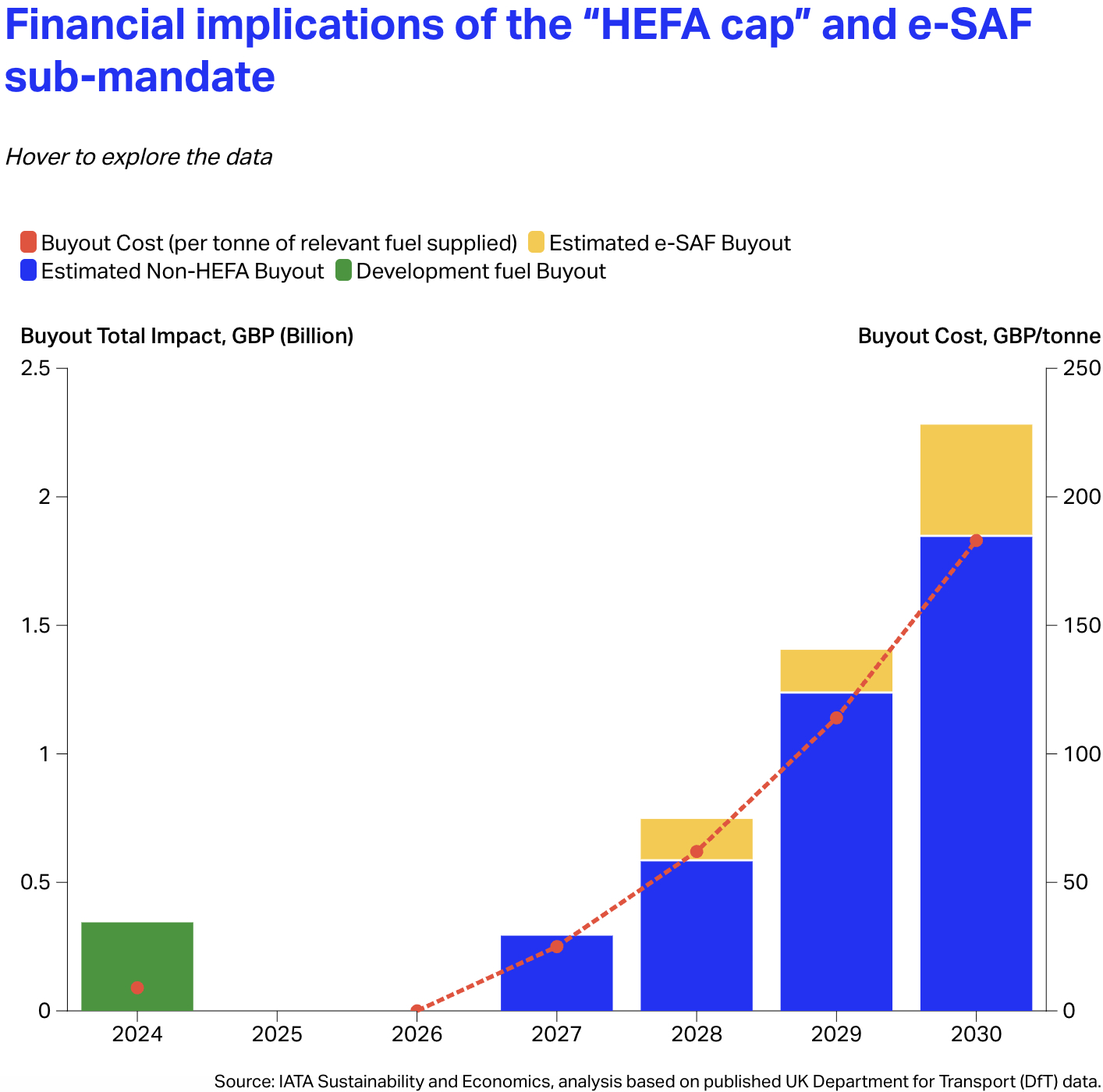
IATA said the limited availability of non-HEFA SAF and e-SAF could drive annual buyout costs to approximately £300 million in 2027, rising to as much as £2 billion by 2030 if supply fails to keep pace with mandated demand. The association estimates that would add about £183 per tonne of conventional aviation fuel supplied, before accounting for other compliance costs.
While buyout mechanisms already exist under the U.K.’s Renewable Transport Fuel Obligation, where SAF was previously classified as a development fuel, IATA noted that those costs are spread across a much larger pool of transport fuels. Under the SAF Mandate, the financial burden would fall much more heavily on airlines.
The association said production of non-HEFA SAF remains limited and argued that mandates should be aligned with the availability of eligible fuels. It called for greater policy support and investment to expand production capacity, broaden feedstock eligibility and accelerate commercialization of advanced SAF pathways before progressively tightening mandate requirements.
IATA said the long-term success of the U.K.’s SAF strategy will depend on sequencing supply growth ahead of increasingly stringent demand obligations to avoid imposing significant costs without corresponding emissions reductions.
Tags: International Air Cargo Association, ReFuelEU Aviation