






Archives
Feature, Freight News, Logistics
Survey Details Tariff Strain on Small Importers
[ July 24, 2026 // Gary Burrows ]A survey released by We Pay the Tariffs, an advocacy organization that opposes broad U.S. tariffs, found many small businesses continue to report higher costs, reduced margins and delayed investment tied to U.S. trade duties, underscoring the ongoing challenges many importers say they face despite evolving tariff policies.
The report is based on responses from 241 U.S. small businesses that said they incurred tariffs under multiple trade authorities, including the International Emergency Economic Powers Act (IEEPA), Section 232 and Section 301. Respondents represented companies across 40 states and the District of Columbia spanning manufacturing, wholesale distribution, retail and specialty imports.
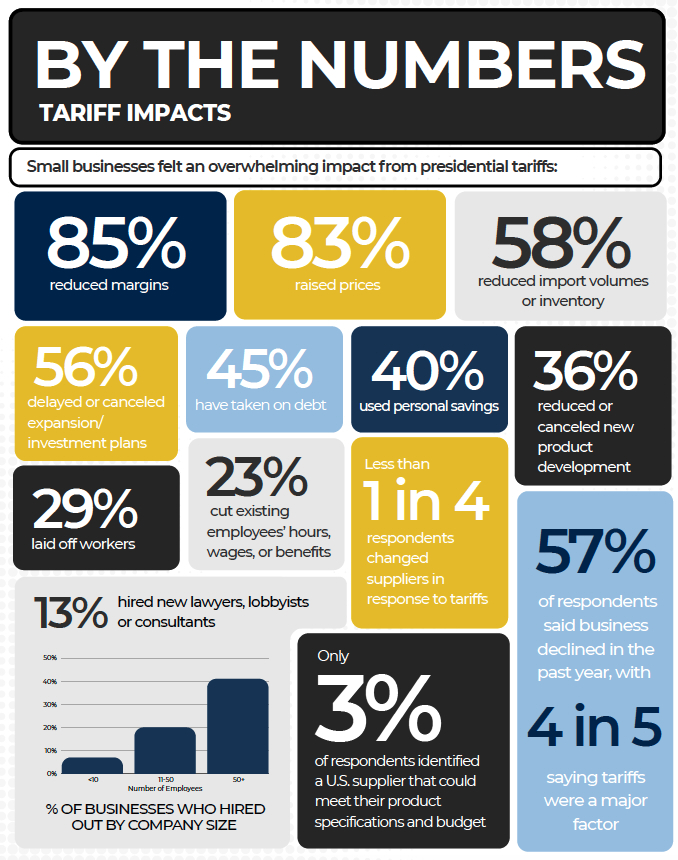
Among the survey’s findings, 85 percent of respondents said tariffs reduced their profit margins, 83 percent reported raising prices and 56 percent said they delayed or canceled investment or research and development projects. Forty-five percent said they took on debt to cover tariff costs, while 40 percent used personal savings. Nearly three in 10 respondents reported laying off employees, and 93 percent said they expect additional tariffs to have either a very or somewhat negative impact on their businesses over the next year.
Beyond the survey data, the report includes numerous accounts illustrating how tariffs have affected supply chain planning. Several companies said they could not quickly shift production because qualified domestic suppliers were unavailable or required lengthy testing and certification. Others cited long production lead times that left them paying higher duties on goods already ordered months before tariff changes were announced.
The report also challenges assumptions that companies can readily reshore production, with respondents describing shortages of domestic manufacturing capacity, specialized tooling and qualified suppliers. Only 3 percent of respondents said they had identified a U.S. supplier capable of meeting both their product specifications and budget, while fewer than one in four said they changed suppliers in response to tariffs.
The organization said the findings demonstrate that tariff costs extend beyond the duties themselves by affecting financing, hiring, inventory planning and long-term investment decisions. Because the survey was conducted by an advocacy group representing businesses that incurred tariff costs, its findings reflect the experiences of tariff-exposed companies rather than a statistically representative sample of all U.S. small businesses. Even so, the report provides another snapshot of how smaller importers say continuing trade policy uncertainty is influencing sourcing, pricing and investment decisions across global supply chains.
Tags: International Emergency Economic Powers Act, We Pay the Tariffs