







Archives
Freight News, Logistics, Sea
Grain Exports Lift Dry Bulk, Softer 2nd Half Seen
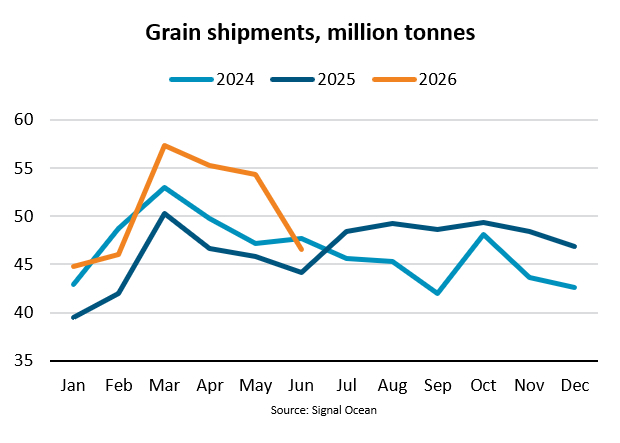
[ July 17, 2026 // Gary Burrows ]Global grain shipments rose 13 percent year over year during the first half of 2026, helping support freight demand for smaller dry bulk vessels even as BIMCO warned that weather risks, fertilizer shortages and slowing production could weaken the market later this year.
The shipping association said stronger wheat, corn and soybean exports from North and South America and Europe drove higher shipments to buyers in Asia, the Middle East and North Africa.
China remained a key growth market, with grain imports rising 15 percent from a year earlier. Improved trade relations between the U.S. and China helped fuel a 137 percent increase in U.S. grain shipments to China, reversing weaker volumes seen in 2025. Imports also strengthened across Southeast Asia, particularly in Vietnam, Thailand and the Philippines.
Despite disruptions tied to the closure of the Strait of Hormuz, grain shipments to the broader Middle East and North Africa increased 18 percent. While cargoes destined for Persian Gulf ports fell 49 percent, exporters shifted volumes toward Saudi Arabian Red Sea ports and Fujairah, highlighting the flexibility of regional supply chains.
“The higher grain volumes have primarily benefited the supramax segment, where shipments have surged 27 percent year over year so far this year,” said Filipe Gouveia, shipping analysis manager at BIMCO. “Without the increase in grain shipments, supramax demand would instead have stagnated.”
The increase translated into a 4 percent rise in global supramax tonne-mile demand, helping support freight rates in a market otherwise facing weakness in several bulk commodities.
Grain cargoes carried by handysize vessels increased 10 percent, offsetting declines in coal and minor bulk trades, while panamax grain shipments rose 8 percent, although coal remained the larger demand driver for that segment.
BIMCO cautioned that several factors could weigh on grain trades during the second half of the year. Fertilizer shipments have fallen 8 percent as exports from the Persian Gulf remain constrained, potentially affecting crop yields in Southern Hemisphere growing regions if the Strait of Hormuz does not fully reopen. At the same time, high temperatures across parts of Europe and North America are threatening corn harvests expected later this year.
The association also pointed to U.S. Department of Agriculture forecasts calling for modest declines in global wheat and corn production from last year’s elevated levels. Rising domestic grain production in major importing countries, including China and Türkiye, could further reduce import demand.
For dry bulk operators, the report suggests grain has become one of the market’s strongest demand drivers in 2026, but BIMCO expects that support to moderate if production and import forecasts materialize during the second half of the year.
Tags: BIMCO