






Archives
Feature, Freight News, Logistics, Rail, Road, Sea
Record Natural Gas Consumption for ’26-’27, EIA
[ May 19, 2026 // Gary Burrows ]U.S. energy production reached another all-time high in 2025, driven by continued growth in natural gas, crude oil and renewable energy output, according to new data from the U.S. Energy Information Administration.
Total U.S. energy production climbed 3.4 percent year over year to 107 quadrillion British thermal units, marking the fourth consecutive annual production record, the agency said in its latest “Today in Energy” analysis.
The gains were fueled by record output from natural gas, crude oil, natural gas plant liquids and renewable energy sources including wind and solar generation. Renewable energy production increased 3 percent from 2024 levels, marking a fifth straight annual increase, according to the EIA.
The report underscores the increasingly complex structure of the U.S. energy economy, where fossil fuel production continues expanding even as renewable generation rapidly grows and utilities face mounting electricity demand tied to artificial intelligence infrastructure, data centers and electrification trends.
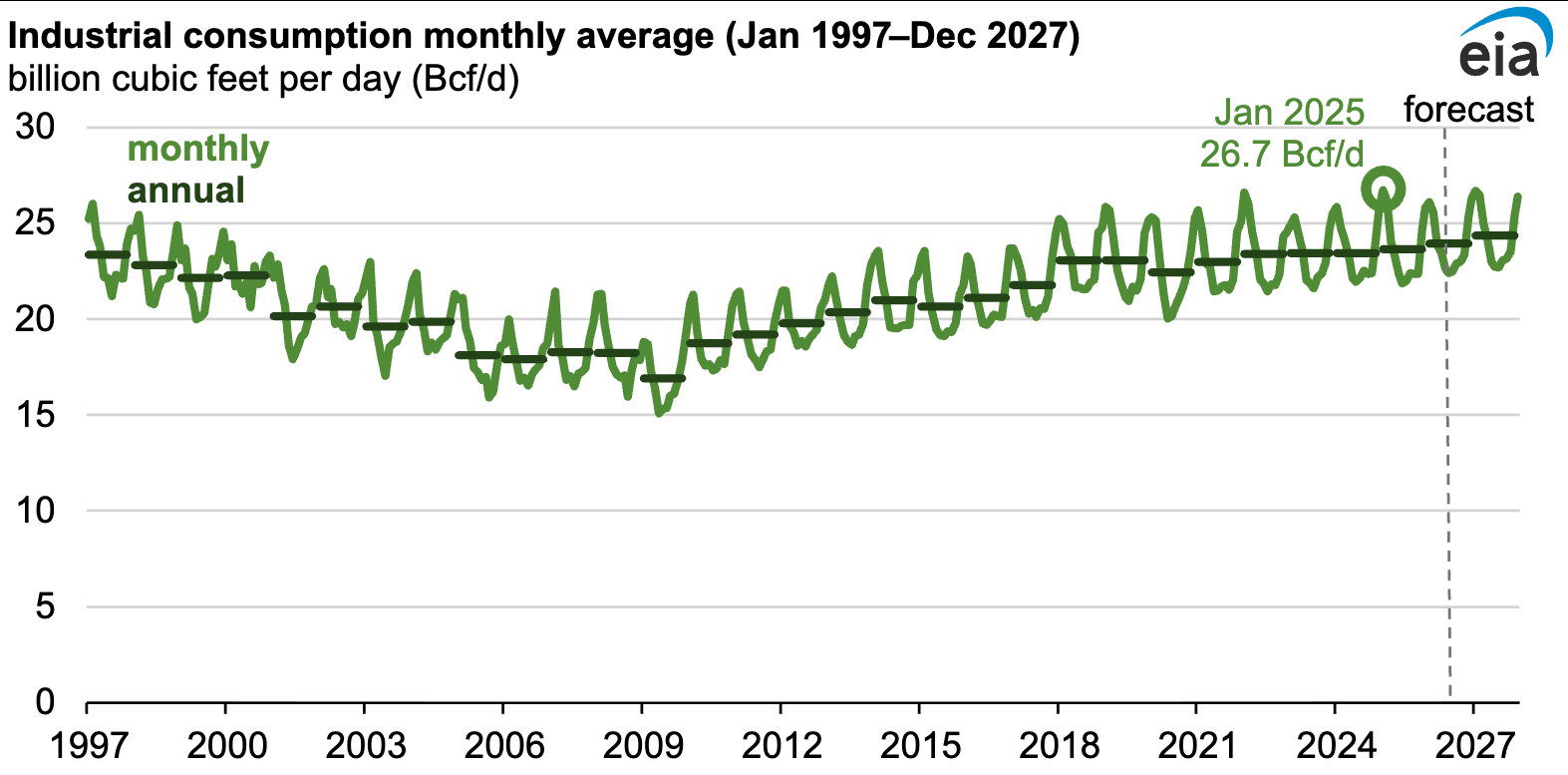
In separate forecasts released this month, the EIA projected U.S. electricity consumption will continue reaching record levels through 2027, supported by expanding commercial demand from AI-related data centers and broader electrification across transportation and heating sectors.
Natural gas remains central to that outlook.
The EIA forecasts U.S. dry natural gas production will rise to 110.6 billion cubic feet per day in 2026, up from a record 107.7 billion cubic feet per day in 2025, with additional growth expected in 2027. Liquefied natural gas exports are also projected to continue climbing as new export facilities enter service.
At the same time, renewable energy is steadily taking larger shares of the power generation mix.
In Texas, utility-scale solar generation within the ERCOT power market is expected to surpass coal-fired generation for the first time in 2026, according to EIA forecasts. Solar output in ERCOT is projected to reach 78 billion kilowatt-hours next year, compared with 60 billion kilowatt-hours from coal generation.
Coal production, meanwhile, is expected to continue declining as utilities retire aging coal-fired generation and replace portions of that capacity with natural gas, solar, wind and battery storage systems. The EIA projects U.S. coal production could fall to its lowest level since the early 1960s by 2027.
The agency’s longer-range Annual Energy Outlook 2026 projects U.S. energy markets through 2050 and suggests overall energy consumption could remain relatively flat despite economic growth, largely because of improving efficiency and technological gains.
For freight transportation, logistics and industrial sectors, the expanding role of electricity and natural gas carries significant implications for infrastructure investment, power reliability and fuel costs, particularly as data center growth intensifies competition for generation capacity in regions such as Texas and the Mid-Atlantic.
Tags: U.S. Energy Information Administrationb