







Archives
Freight News, Logistics, Sea
China Looks to Electrify Inland Water Transport
[ May 19, 2026 // Gary Burrows ]Hong Kong-based maritime energy and transport companies are deepening efforts to electrify inland shipping operations across the Pearl River Delta and Greater Bay Area, underscoring the region’s growing push toward lower-emission marine transport infrastructure.
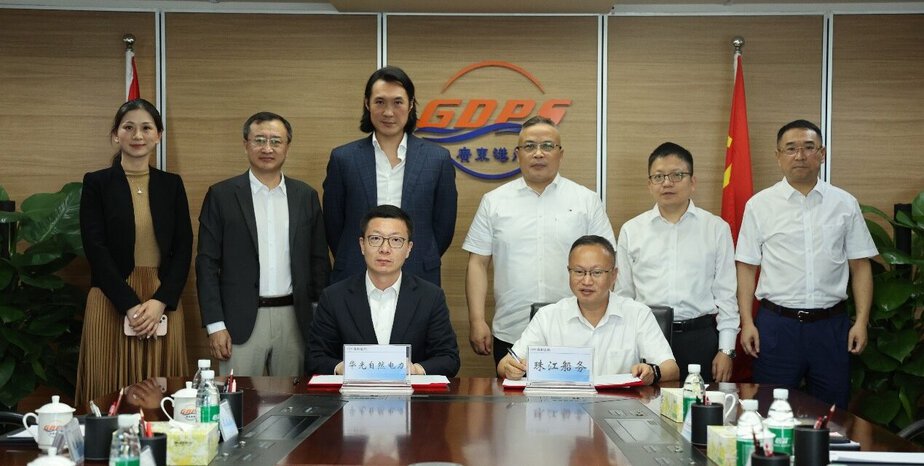
Wah Kwong NatPower Holdings and Chu Kong Shipping Enterprises (CKS) signed a memorandum of understanding to cooperate on the electrification of inland water transport between Hong Kong and Guangdong, the companies said May 15.
The agreement focuses on electric vessel development, charging and battery-swapping infrastructure at Guangdong-Hong Kong terminals, and broader deployment of electric-powered waterborne transport systems across the region.
CKS is a subsidiary of Guangdong Provincial Port & Shipping Group Company Limited and operates extensively in port logistics and regional marine transport. Wah Kwong NatPower combines the maritime experience of Wah Kwong Maritime Transport Holdings with marine energy infrastructure developer NatPower Marine.
The companies said the agreement reflects a broader industry shift as the shipping sector accelerates efforts to reduce emissions and comply with increasingly stringent environmental targets.
“The cooperation with CKS reflects a shared vision for the development of water transport electrification in Hong Kong and the Greater Bay Area,” Vincent Ni, general manager of Wah Kwong NatPower, said in a statement.
The partnership comes as authorities and maritime stakeholders throughout the Guangdong-Hong Kong-Macao Greater Bay Area expand investment in alternative marine fuels, shoreside charging systems and electrified vessel technologies.
Industry observers say inland and short-sea shipping routes are viewed as among the most viable early applications for vessel electrification because of their relatively predictable sailing distances and fixed port calls.
The companies said they plan to explore deployment of charging and battery-swapping networks designed to support cross-border operations while also promoting greater standardization of charging systems and energy replenishment infrastructure.
Such interoperability is considered critical to broader commercial adoption of electric vessels, particularly in heavily trafficked regional trade corridors where inconsistent infrastructure standards could hinder operational efficiency.
The agreement also calls for the establishment of a joint working group to identify priority projects and accelerate development of practical infrastructure solutions tailored to Hong Kong and regional operating conditions.
The move highlights increasing momentum in Asia’s maritime decarbonization efforts as ports, shipowners and logistics operators seek scalable pathways to reduce emissions from coastal and inland shipping operations.
While battery-electric propulsion remains less practical for long-haul deep-sea shipping because of current energy density limitations, analysts have identified ferries, harbor craft and inland cargo vessels as promising near-term candidates for electrification.
The Greater Bay Area has emerged as a key testing ground for maritime energy transition initiatives, supported by strong manufacturing capacity, dense port networks and regional government backing for green transportation development.
Tags: Chu Kong Shipping Enterprises, Wah Kwong NatPower Holdings