







Archives
Feature, Freight News, Logistics, Rail, Sea
APM Terminals Doubles Pier 400 Rail Capacity
[ April 10, 2026 // Gary Burrows ]APM Terminals’ US$73 million rail expansion at Port of Los Angeles is accelerating cargo flows from ships to inland markets, as upgraded infrastructure at Pier 400 boosts capacity and cuts transit times.
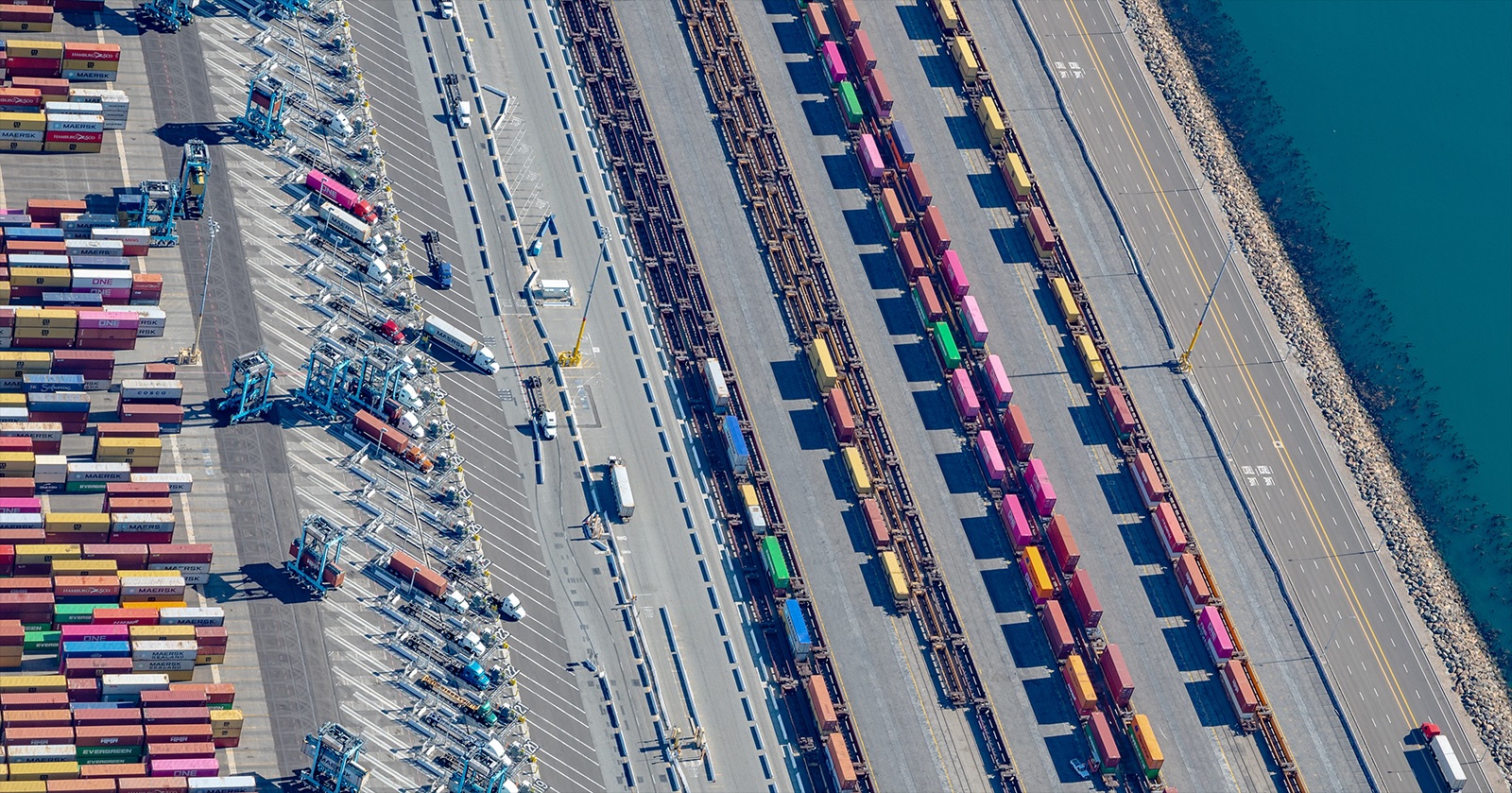
The project, implemented at APM Terminals Los Angeles, added 31,000 linear feet of track and doubled on-dock rail storage. Since 2023, rail volumes at the terminal have climbed 104 percent, with weekly lifts rising from about 5,000 to 11,000.
“This strategic upgrade enhances the Port of LA’s attractiveness as a gateway for cargo owners who rely on fast, efficient and well-connected supply chains,” said Jon Poelma, managing director of APM Terminals Los Angeles.
The expansion centers on on-dock rail, allowing containers to move directly from vessels to trains without leaving the terminal by truck. Eastbound cargo now typically departs in under two days, compared with nearly a week at some facilities.
The yard includes 12 working tracks and 11 storage tracks, with capacity for four import trains daily and about 1,100 forty-foot equivalent units (FEUs) per day on rail lines operated by BNSF Railway and Union Pacific Railroad. Those lines connect to the Alameda Corridor, which carries about 10 percent of U.S. waterborne container traffic.
Port officials said the added capacity also eases congestion across the San Pedro Bay complex, where terminals share limited rail access.
The project has been recognized by the Construction Management Association of America and the American Society of Civil Engineers.
Environmental gains are also expected. By shifting more cargo to rail, the terminal could eliminate up to 1,200 daily truck trips by 2040.
“One of the main reasons we did this project was to benefit both the community and the environment, by putting boxes on trains,” said Chris Brown, chief harbor engineer for design at the Port of Los Angeles.
Engineers preserved a marine passage through the site by building a concrete rail bridge over a gap that allows water flow and wildlife movement.
Terminal operators said process improvements have been as critical as new infrastructure. Mark Dixon, senior rail operations manager at APM Terminals Los Angeles, said the focus is on consistency and trust.
“We always want to challenge the status quo,” Dixon said.
Using lean operating practices, the terminal has achieved dwell times of less than three days, said Camron York, director of operations for rail and gate at APM Terminals Los Angeles.
For operators, the upgrade reflects a broader push to deliver faster, more reliable inland connections as supply chain demands grow.
An APM Terminals video shows Pier 400’s progress, at https://tinyurl.com/59542vtn.
Tags: APM Terminals, Port of Los Angeles