







Archives
Freight News, Logistics, Sea
China to Resume US Soya Bean Imports, BIMCO
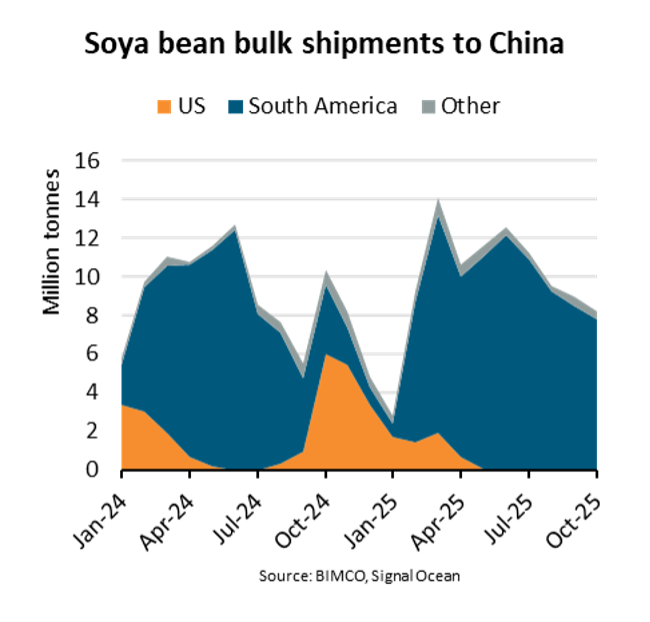
[ November 7, 2025 // Gary Burrows ]Following U.S.-China trade negotiations, China has committed to resume imports of U.S. soya beans and will purchase 12 million tonnes during the rest of 2025 and 25 million tonnes per year during the next three years, like 2024 volumes. If these commitments are met, U.S. soya bean shipments are expected to surge in the short term before establishing in the medium term, said Filipe Gouveia, shipping analysis manager at BIMCO.
Besides the import targets for soya beans, China agreed to lower tariffs for U.S. grains and meat and to resume U.S. sorghum imports. The U.S. agreed to lower tariffs on Chinese goods by 10 percent and countries agreed to suspend port fees on each other’s ships for one year.
The trade deal would boost U.S. soya shipments, which have fallen 27 percent year-over-year. The U.S. has managed to boost shipments to destinations other than China, but it hasn’t been enough to mitigate a 65 percent year-over-year drop in shipments to China. Chinese imports, however, have still increased 5 percent year-over-year during the period, supported by a 21 percent increase in shipments from South America.
“Over the coming months, we expect to see inventory building in China, as purchasing of U.S. cargoes increases. Meanwhile, South America’s upcoming harvest is expected to drive down prices, further encouraging purchasing. The panamax segment is expected to be the main beneficiary of this increase as it transports 93 percent of soya bean cargoes to China,” Gouveia said.
Soya beans hit 15-month high following trade negotiations, while Brazilian prices dropped, prompting China to increase purchasing. Overall, the shift to U.S. soya bean shipments, the China deal could lead to lower volumes from South America compared to 2025.
Traditionally, this shift would have reduced tonne-mile demand due to shorter sailing distances. However, since 2022, U.S. shipments have increasingly bypassed the Panama Canal, opting instead for the longer route via the Cape of Good Hope, making their distances comparable to those from South America.
“China’s soya bean demand is expected to continue growing in the medium term, supported by rising meat production, especially poultry. However, shipments of U.S. soya beans might not rise beyond agreed volumes, as Chinese buyers often favor lower-priced South American cargoes.
Tags: BIMCO