







Archives
Freight News, Sea
Blue Water Switches Port Operations Fuel to HVO
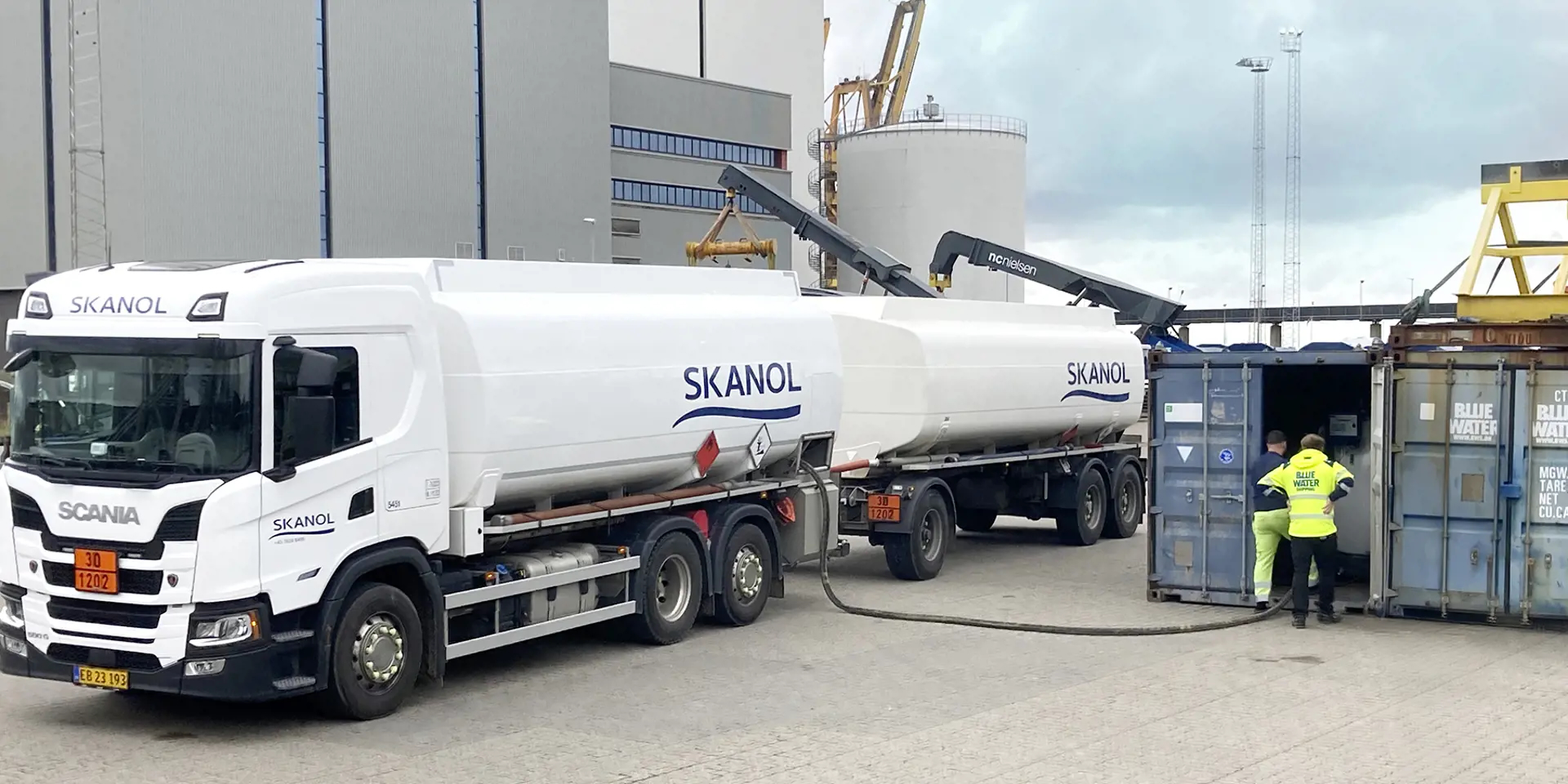
[ August 15, 2025 // Gary Burrows ]Blue Water, in its efforts to reduce the company’s CO2 emissions, has introduced HVO, or hydrotreated vegetable oil diesel, as fuel for port activities in Esbjerg, Aarus and Lindø, Denmark.
The shipping line said its switch to HVO diesel will reduce emissions by up to 90 percent compared to traditional diesel. This corresponds to an annual saving of about 1,575 tonnes of CO2 from Blue Water’s total direct emissions according to 2024 figures. The initiative covers nearly 600,000 liters of diesel per year for equipment such as forklift trucks, reach stackers and terminal tractors, which are used for heavy-lift cargo, such as wind turbine components.
“We see a market advantage in the availability of HVO, which enables us to take a significant step towards more sustainable port operations, said Søren N. Thomsen, outgoing CEO of Blue Water. “This investment reduces our environmental footprint and strengthens our position as a responsible and forward-looking logistics partner.”
Karen Sandrini, ESG and sustainability manager at the Port of Esbjer, credited the port’s years-long partnership with Blue Water. “We are delighted that it is now also making a concrete contribution to reducing CO2 in Esbjerg. It is important that we work together across companies and functions to bring about real change,” she said.
Port of Esbjerg’s ambition is becoming a climate-neutral port. This includes the establishment of a shore power facility that enables most vessels calling the port to turn off their generators and use wind energy instead. Blue Water is the largest player in Esbjerg’s onshore port activities, the port said.
Blue Water in 2023 committed to the international Science Based Targets initiative with a goal of reducing scope 1 and 2 emissions by 42 percent by 2030. With the implementation of HVO diesel, Blue Water has the potential to reduce emissions by 37.8 percent annually based on the CO2 accounts for 2024, bringing it a major step closer to the goal.
“Interest in more responsible fuels is growing, and so is supply. We naturally hope to expand the use of HVO to other parts of the business. For us, it’s about acting when opportunities arise,” Thomsen said.
Tags: Blue Water, Port of Esbjerg